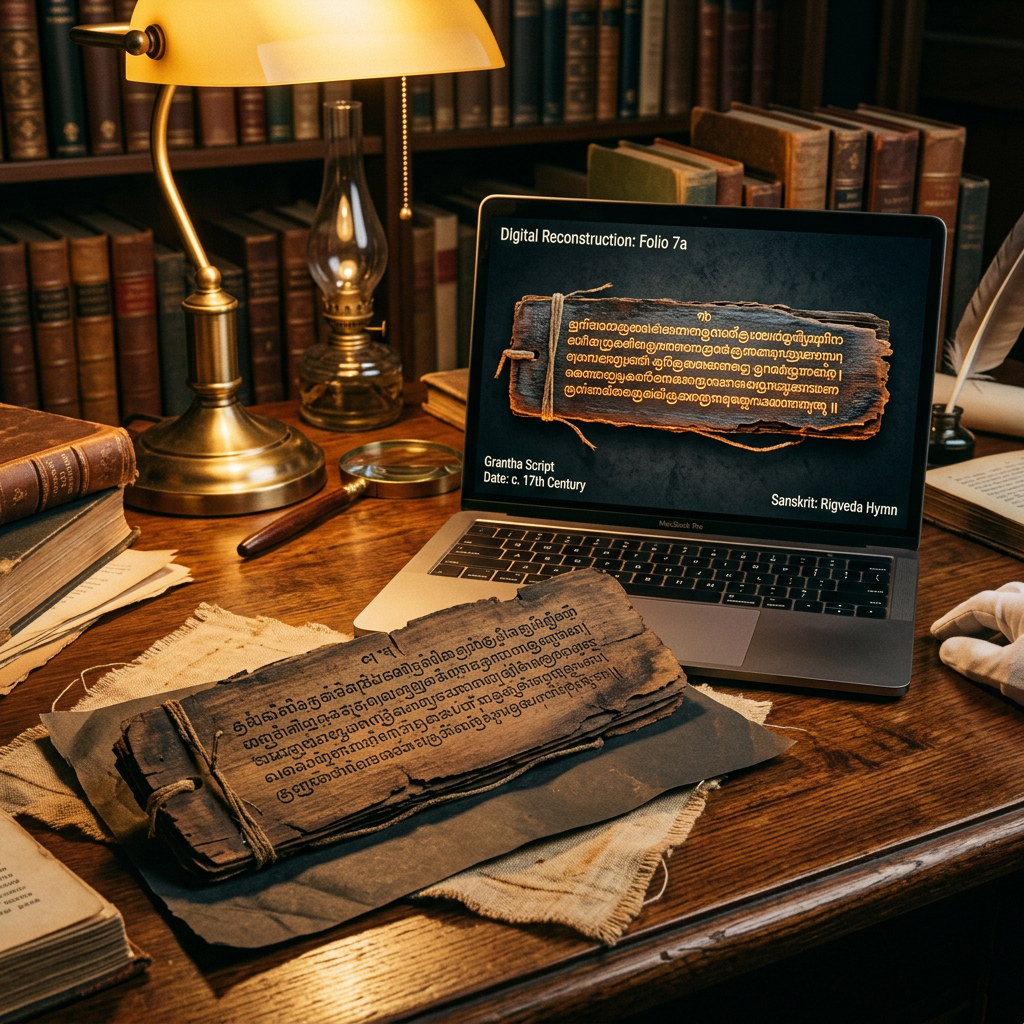
A collaboration between the National Museum of the Philippines and digital paleography experts has led to the decipherment of 8th-century Grantha script fragments found in the Visayas region. The texts, which had remained unread for decades, reveal lost Sanskrit treaties detailing maritime trade agreements between local chiefs and merchant guilds from the Pallava dynasty of South India. These documents outline regulations for the exchange of spices, gold, and textiles, providing evidence of a highly organized trans-oceanic diplomatic network.
The AI-driven reconstruction of the damaged palm-leaf layers shows that these treaties included clauses on maritime safety, tax exemptions for seasonal traders, and the establishment of local Sanskrit-language chanceries. This discovery fundamentally alters the understanding of early Southeast Asian political history, suggesting that Sanskrit was used as a formal diplomatic language for commercial law across the South China Sea.