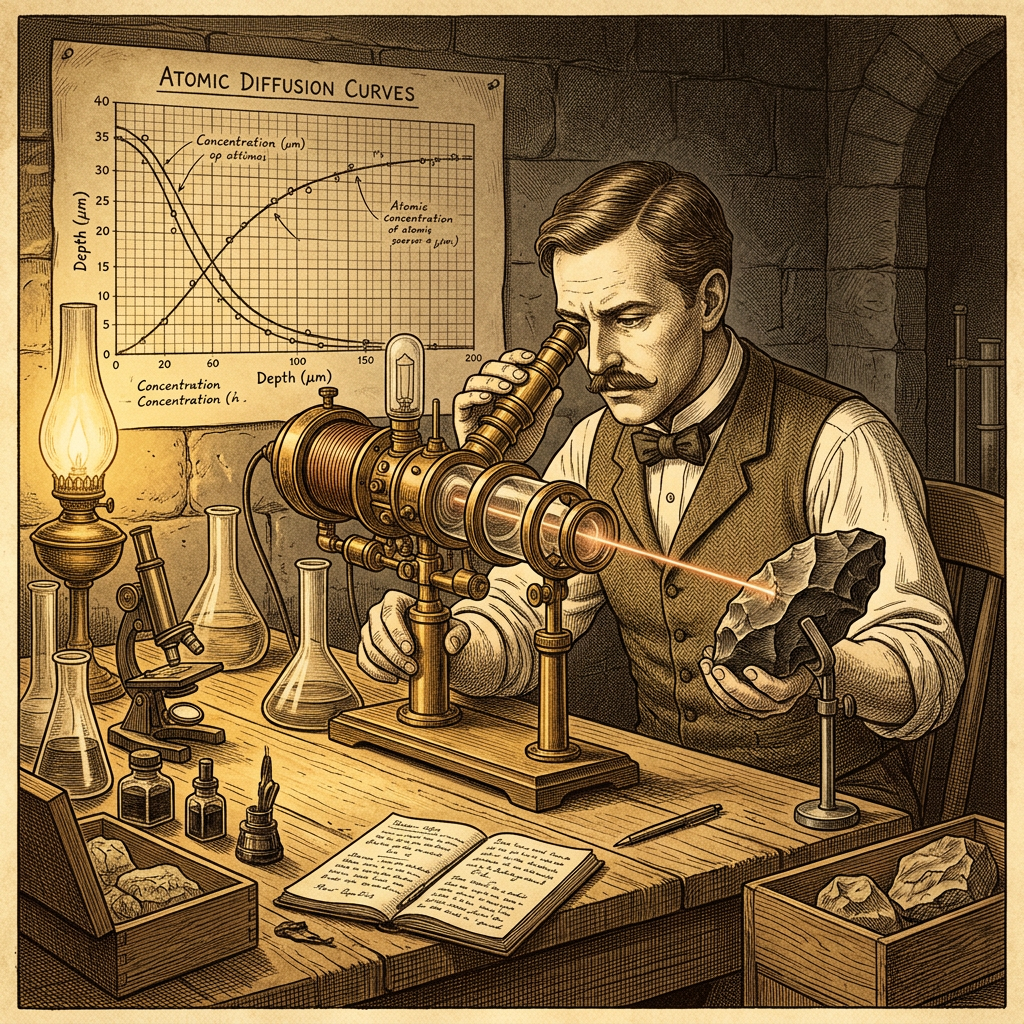
Geoscientists have introduced a revolutionary 'Titanium-Diffusion' dating methodology to analyze the age of stone toolkits recovered from the Narmada Basin. Unlike traditional methods, this technique measures the atomic migration of titanium within mineral crystals, providing a higher level of precision for sites where organic matter for carbon dating is absent.
The application of this technique has successfully pushed back the chronology of Middle Paleolithic transitions in Central India to approximately 150,000 years ago. This breakthrough suggests that ancient hominins in the Indian subcontinent developed sophisticated flake-tool technology much earlier than previously thought, significantly altering our understanding of early human dispersal patterns.