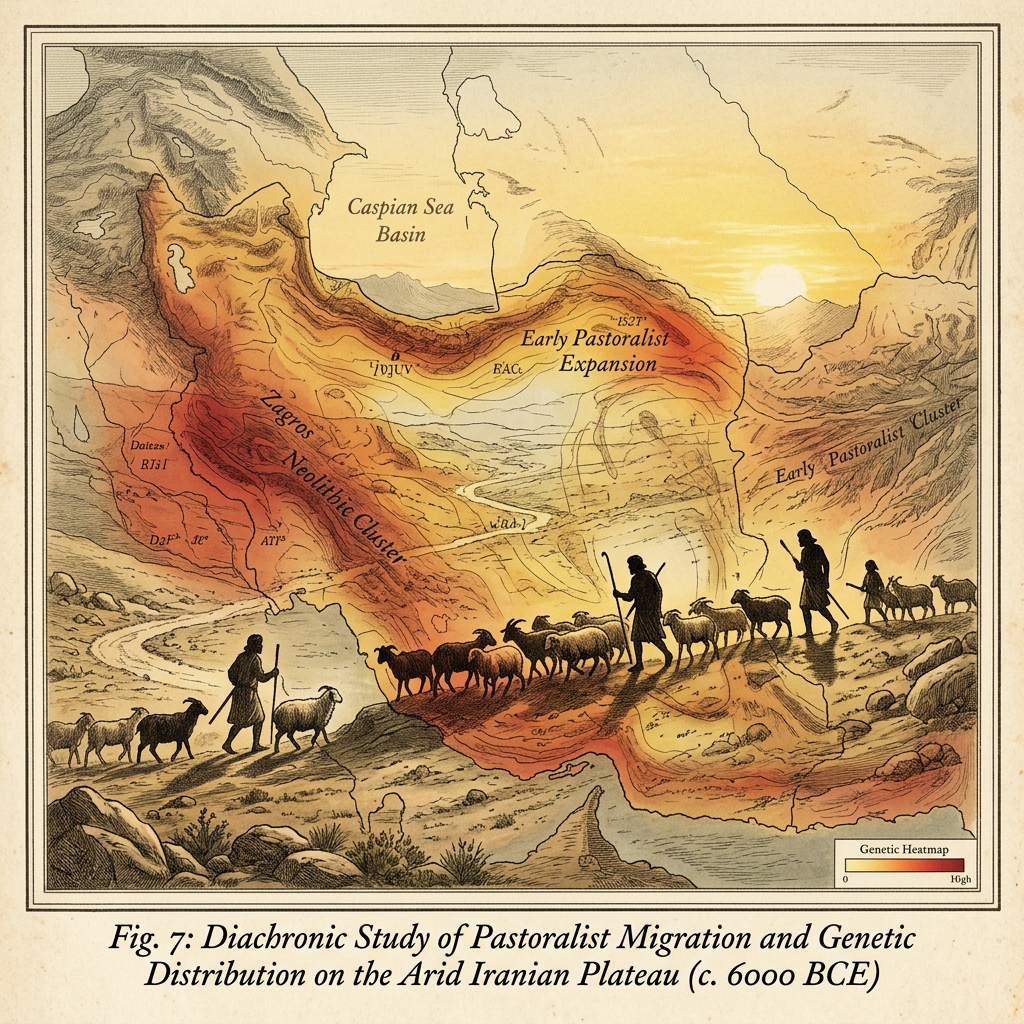
A massive genomic study involving the Max Planck Institute has analyzed 9,000-year-old remains from the Central Iranian Plateau, revealing the earliest known genetic divergence of specialized pastoralist groups. The data shows that these populations underwent a rapid adaptation to semi-arid environments, developing unique metabolic pathways for processing dairy long before the spread of farming into South Asia.
This "ghost lineage" of the Iranian Plateau represents a critical link in the prehistoric migration network that eventually connected the Near East to the Indus Valley. The research provides the first genetic evidence of the specific kinship structures that facilitated the early domestication of goats and sheep across the trans-continental trade routes.