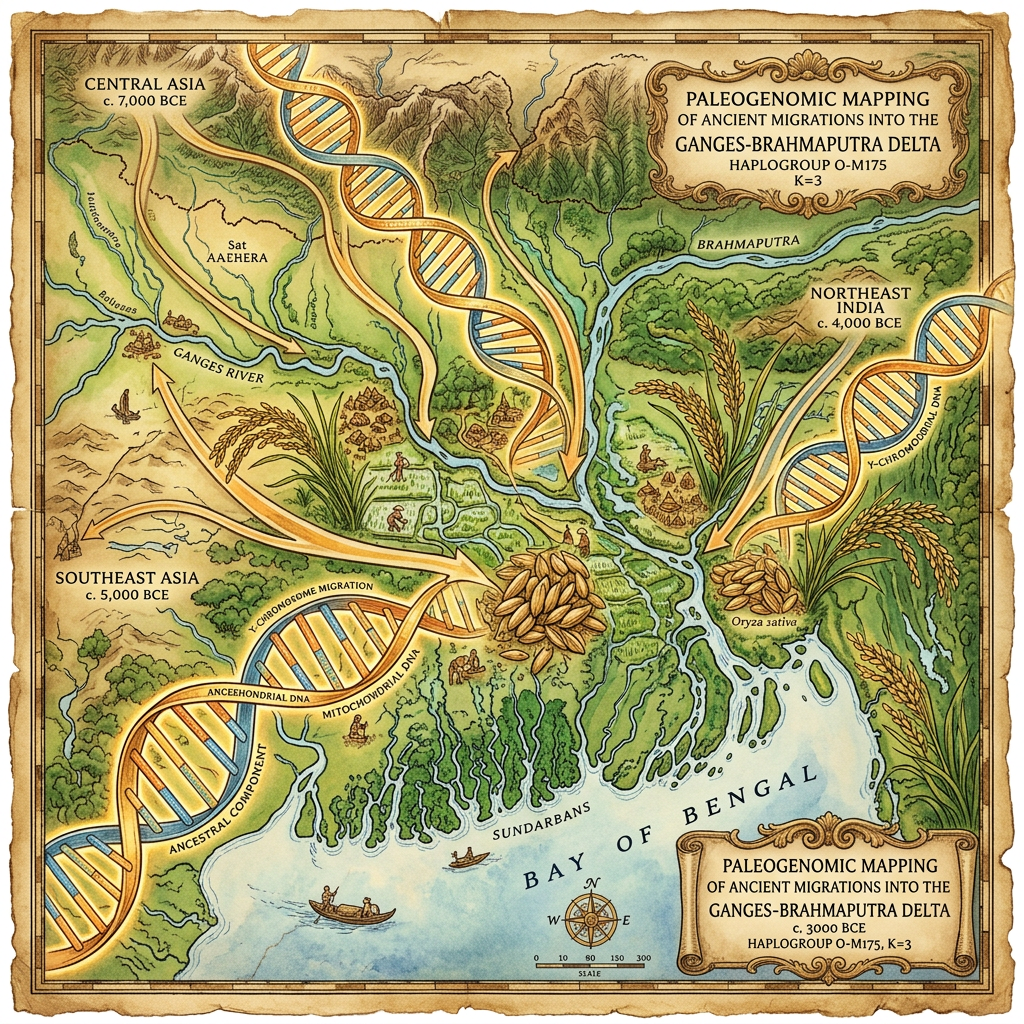
New paleogenomic research published in Nature Anthropology has mapped the genetic history of remains found in the Lower Brahmaputra Delta, dating back 6,000 years. The study identifies a significant genetic shift coinciding with the arrival of early agriculturalists who possessed specific genetic markers for metabolic adaptation to saline-heavy environments, a critical trait for coastal delta farming.
This research confirms that the transition to agriculture in Eastern India was not a simple diffusion of technology but involved the migration of specialized populations. These early farmers developed unique genetic resilience to pathogens endemic to flooded marshlands, facilitating the permanent settlement of the delta and the long-term domestication of indigenous rice varieties.