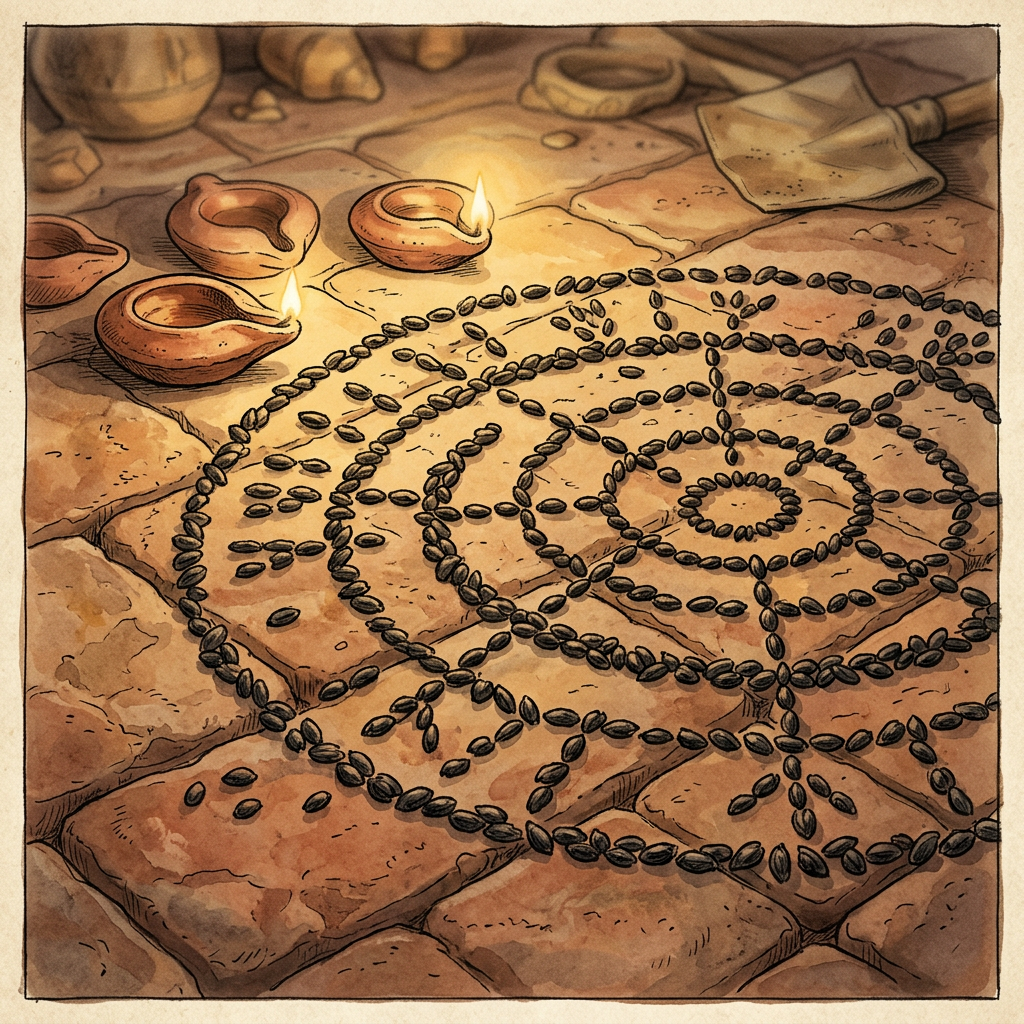
Excavations at a Dvaravati-era site in Nakhon Pathom have revealed a significant offering cache consisting of thousands of carbonized lotus seeds and miniature terracotta lamps. The materials were found within a specialized brick enclosure adjacent to a monumental stupa, dating to approximately the 6th century CE, marking it as one of the oldest physical evidences of organized 'Flower-Offering' festivals in Southeast Asia.
Known as 'Bua Bucha' in modern Thai culture, the act of offering lotuses is a cornerstone of Buddhist seasonal festivals. This discovery confirms that the ritual landscape of early Thailand was already deeply invested in these floral-centered devotions, likely blending early Buddhist tenets with pre-existing local traditions of water-spirit propitiation and seasonal renewal.