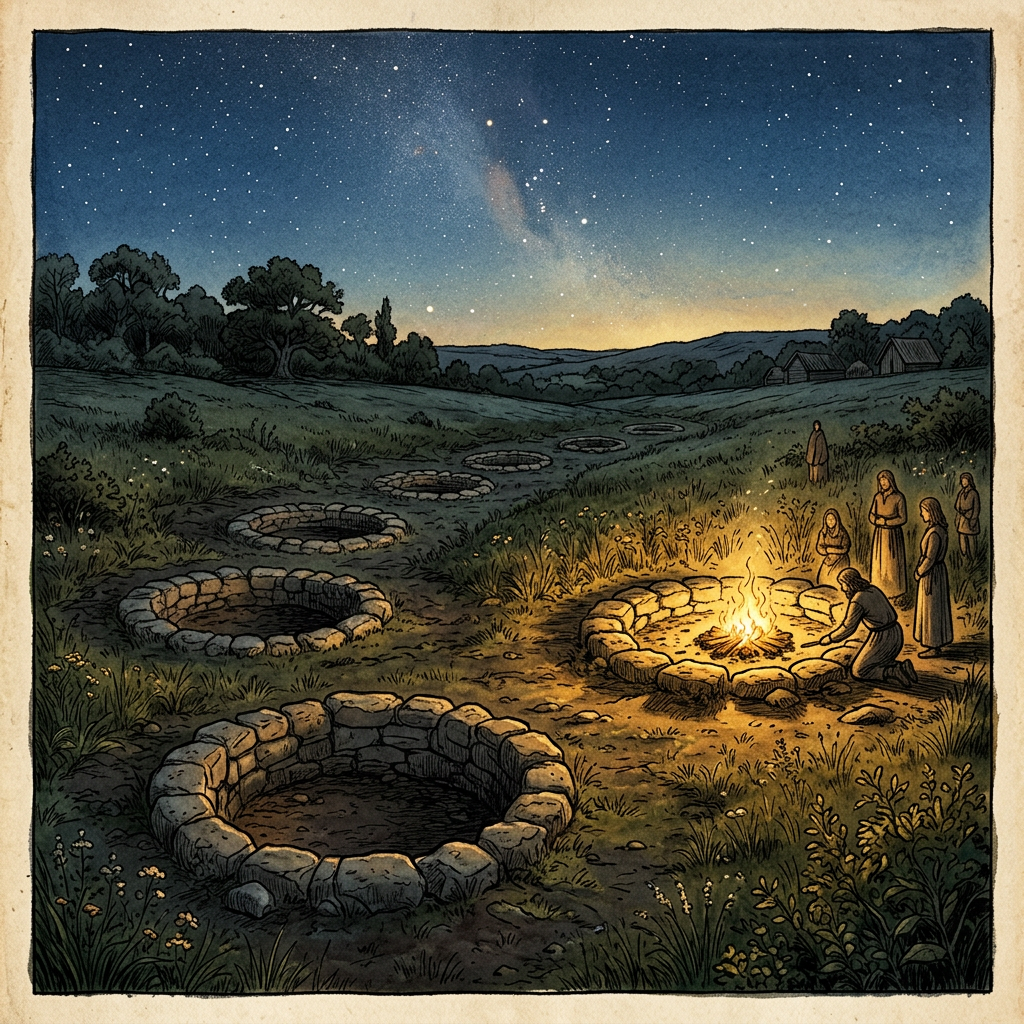
Archaeologists in the Uppland region of Sweden have uncovered a series of seven ritual hearth pits arranged in a precise alignment with the Pleiades star cluster. Dated to the late Iron Age (c. 600 CE), these pits contain layers of charred oak and animal bone fragments, indicating a history of intense, periodic burning that likely marked the transition from the 'dark half' of the year to the 'light half'.
This site is believed to be a precursor to the Valborg (Walpurgis) bonfire traditions still observed across Scandinavia. The astronomical alignment suggests that ancient Norse communities timed their spring fire festivals with specific celestial movements, using communal pyres not just for warmth, but as a symbolic act of purification and protection for livestock before they were moved to summer pastures.