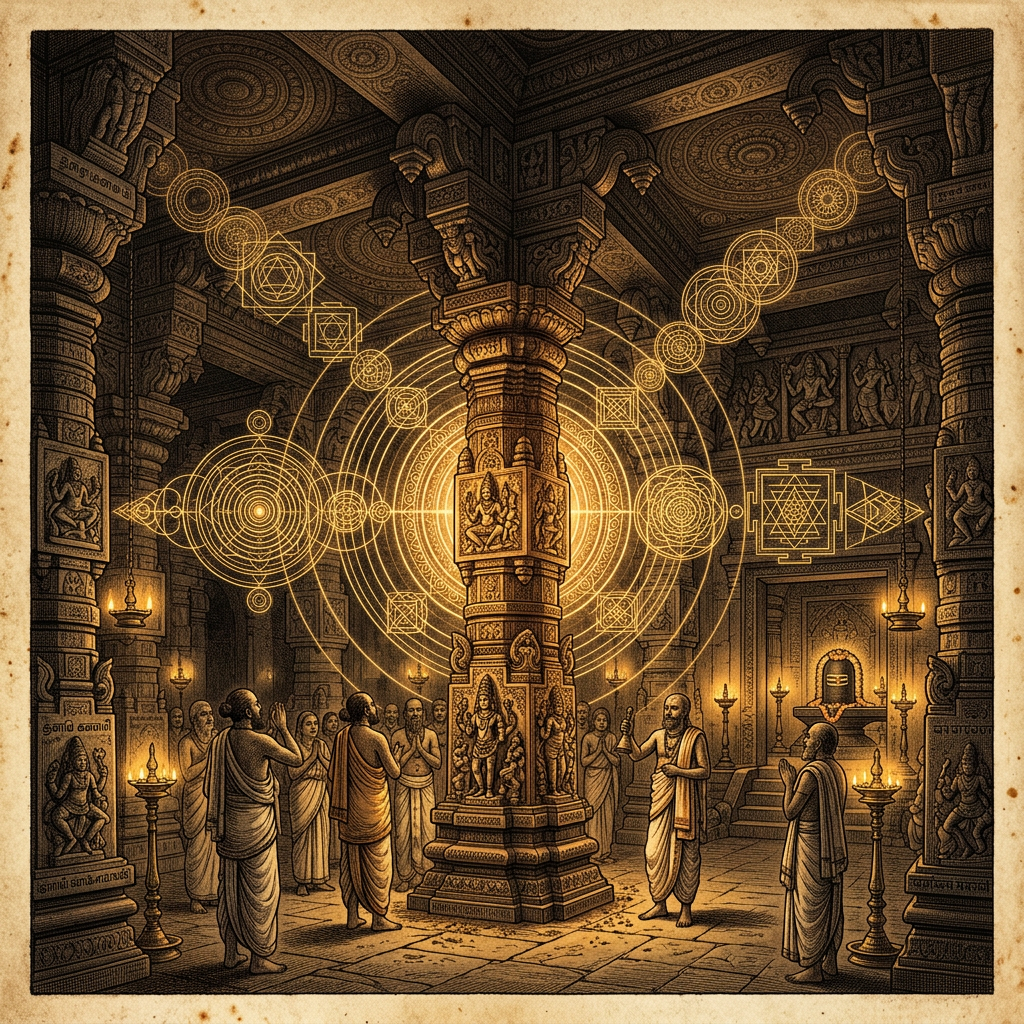
Researchers at the Saraswathi Mahal Library have identified a mislabeled 11th-century Grantha manuscript titled Nada-Siddhi. The text outlines an advanced cosmology of sonic vibration, positing that the universe is not made of matter but of intersecting frequencies. It details how the different meters of the Vedas correspond to specific 'vibrational nodes' in the human consciousness, providing a scientific-philosophical basis for ancient ritual acoustics.
The manuscript is significant for its early integration of mathematical ratios with metaphysical principles, predating later aesthetic theories of Rasa. It describes a 'universal grammar of sound' that governs everything from the rotation of the stars to the heartbeat of a child. This discovery is expected to influence modern research into the philosophy of music and the cognitive effects of ancient chanting traditions.