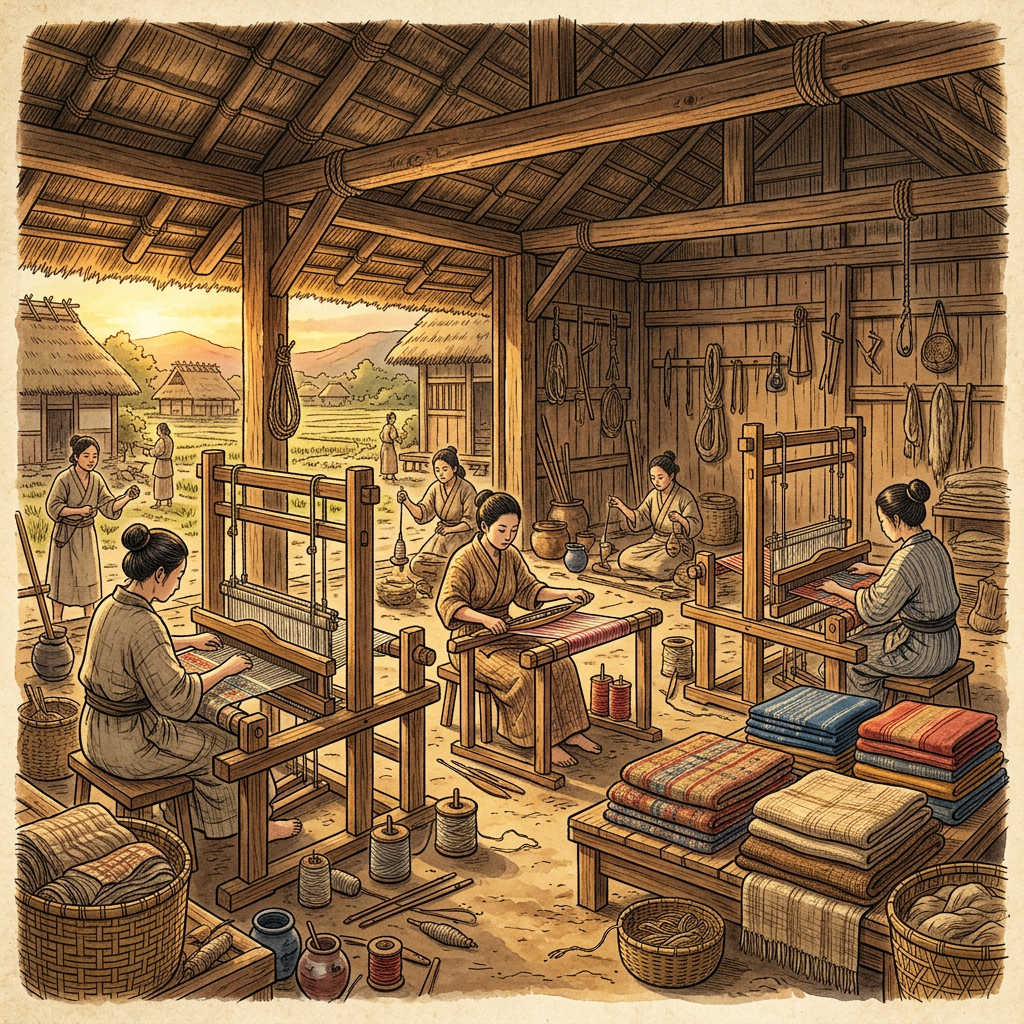
A major excavation in the Saga Prefecture of Kyushu has revealed the remains of a Yayoi Period weaving village dating to the 1st century BCE. The site contains the floor plans of several large communal workshops and an array of sophisticated loom-weights and spindle whorls made from polished stone and clay, indicating a centralized textile industry.
The most remarkable discovery is the presence of silk-hemp hybrid textile fragments preserved in the waterlogged soil. Analysis reveals that the Yayoi people had developed a complex technique for blending local plant fibers with imported silk traditions, creating durable yet prestigious garments that likely signified status within the burgeoning tribal hierarchies of ancient Japan.