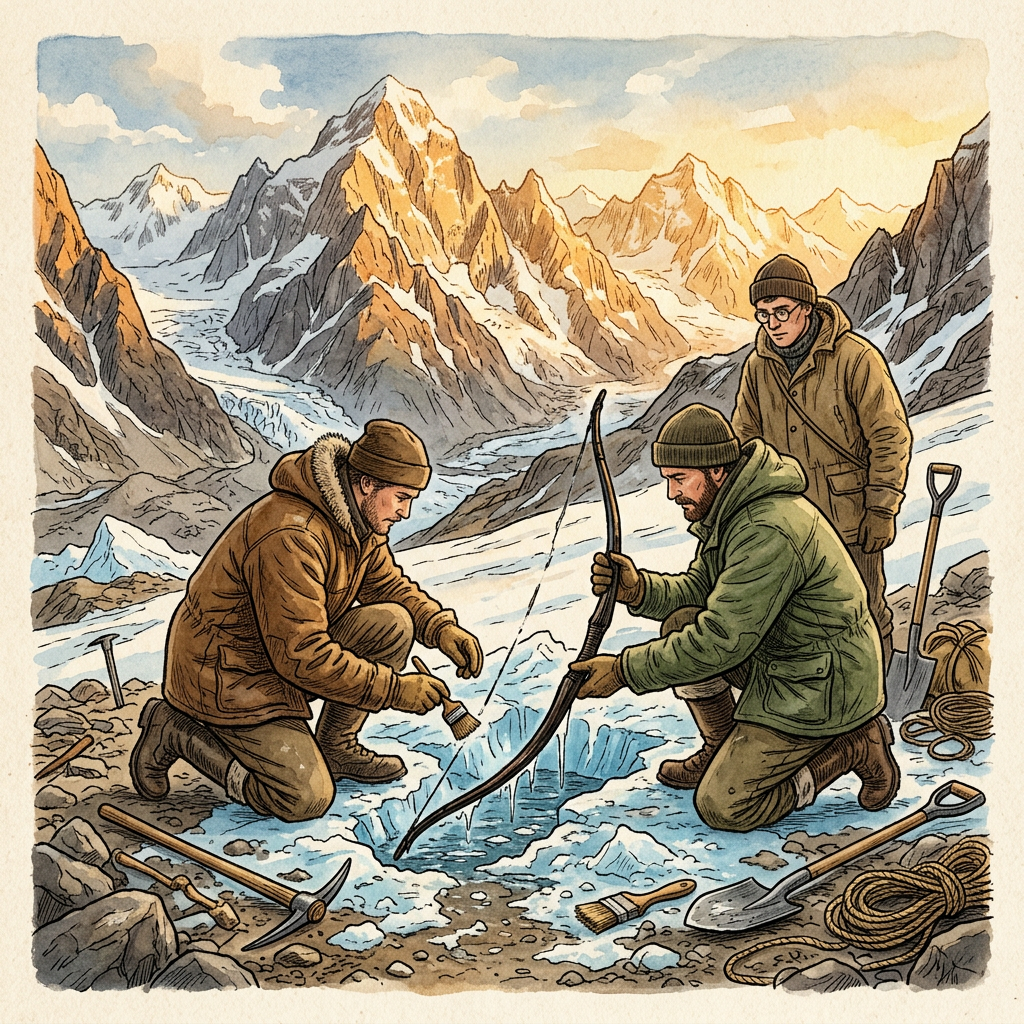
Extreme summer melting in Alaska's Brooks Range has uncovered a perfectly preserved Paleo-Inuit hunting site dating back 5,000 years. Among the finds are unique sinew-backed bows and willow-bark quivers that remain flexible despite five millennia of entombment in ice. The site also yielded organic materials, including caribou-skin clothing and bone needles, offering a rare glimpse into Arctic survival technology during the early Holocene.
Climate archaeologists are working against time to document the site before the organic materials degrade due to exposure to oxygen. This discovery is being hailed as a "frozen library" that provides critical data on how early humans adapted to shifting animal migration patterns caused by prehistoric climate fluctuations.