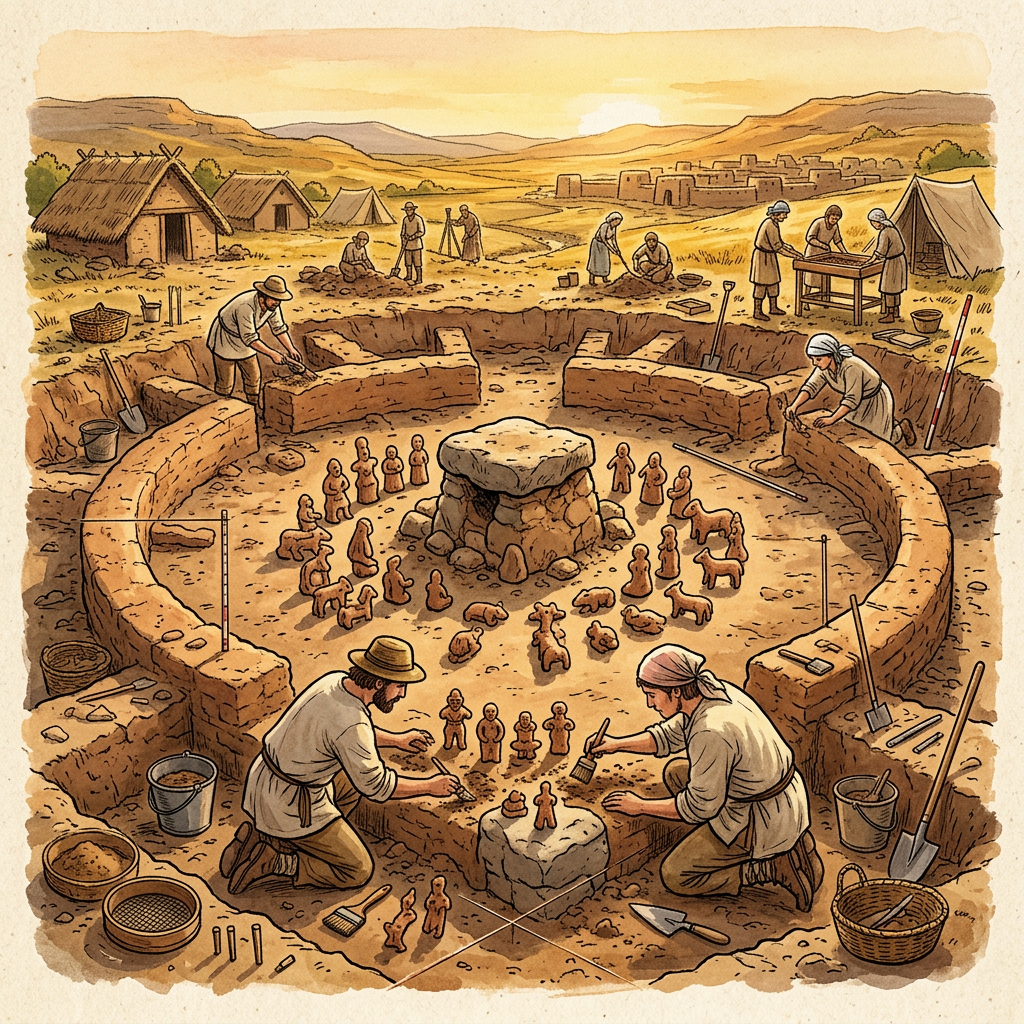
A breakthrough excavation near the city of Soroca has revealed the foundations of a massive 6,000-year-old ritual structure. Attributed to the Cucuteni-Trypillia culture, this 'Temple of the Great Mother' is one of the largest Neolithic religious sites ever found in Eastern Europe. The site features complex clay altars and a series of ritual pits containing hundreds of stylized female figurines.
Evidence suggests the temple was intentionally burned down every 60 to 80 years as part of a recurring ritual cycle of renewal. The discovery provides unprecedented insight into the symbolic world of Europe's earliest agrarian societies, highlighting a sophisticated understanding of communal sacred space and architectural planning long before the rise of the Bronze Age empires.