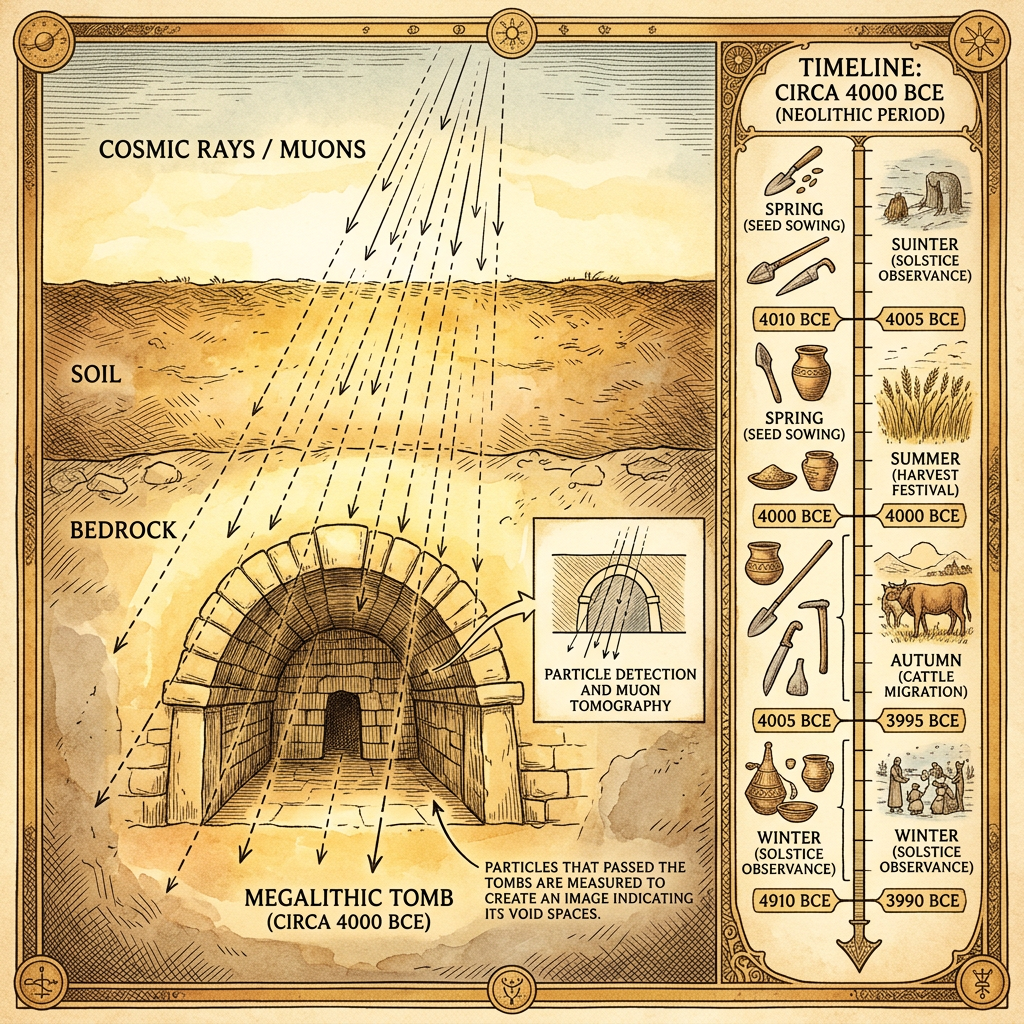
A team of physicists and archaeologists has published a study in Archaeological Research & Methods detailing a revolutionary dating technique. By combining traditional Carbon-14 analysis with muon-induced isotopic refinement, researchers have achieved "seasonal precision" in dating Neolithic Kurgan burial mounds across the Eurasian Steppe. This new methodology allows for the identification of specific years and even seasons of construction, resolving long-standing disputes regarding the timing of early pastoralist migrations.
The study applied this technique to several sites associated with the early Bronze Age expansion, revealing that the movement of these groups was more episodic and climate-driven than previously thought. This high-resolution chronology provides a new framework for correlating genetic shifts with major environmental events, offering a more nuanced view of the anthropological research into the origins of Indo-European speakers and their arrival in the Indian subcontinent.