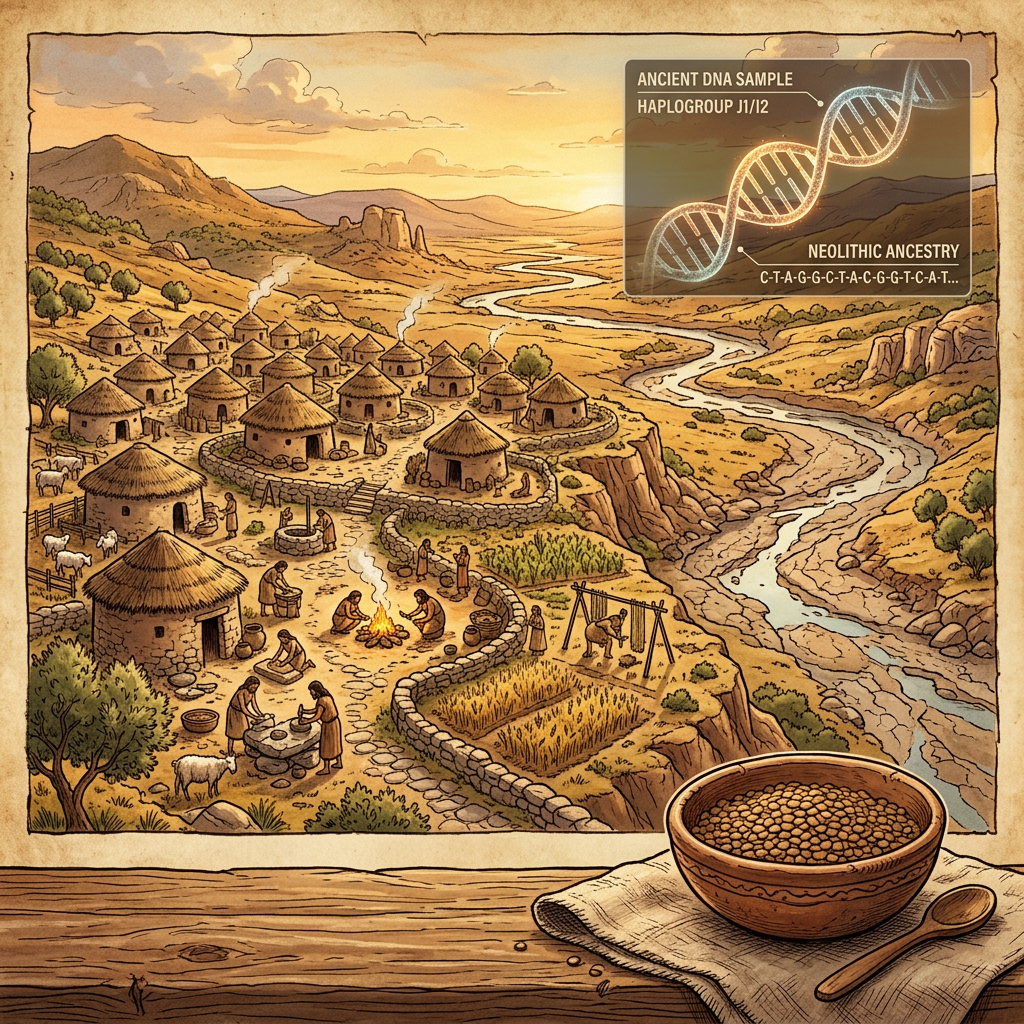
A large-scale genomic study published in World Archaeology Genetics has analyzed the remains of individuals from the Ghaggar-Hakra valley dating back to 7,000 years ago. The research identifies the earliest known genetic divergence in the region linked to dietary adaptation. Specifically, the population exhibited a unique mutation in the SLC7A11 gene, which facilitates the digestion of saline-resistant legumes (pulses) that flourished in the brackish soils of the receding paleo-river system.
This anthropological research provides evidence for a transition in human biology triggered by shifting environmental conditions during the mid-Holocene. As the regional climate became more arid, early agriculturalists specialized in crops that could tolerate high salt concentrations. This study illustrates how ancient DNA analysis can reconstruct the intimate relationship between prehistoric diet, environmental stress, and the human genome in the cradle of the Indus civilization.