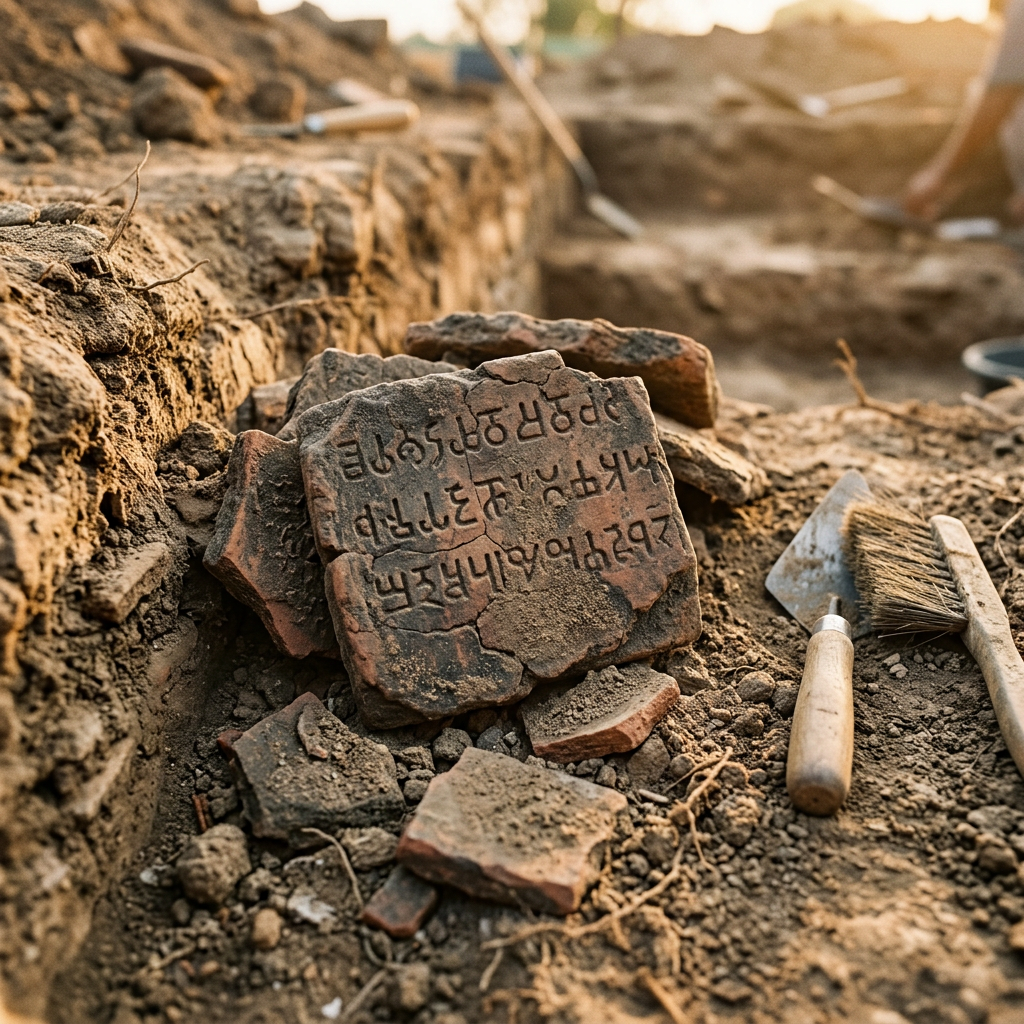
Archaeologists excavating a site in the Ghaggar-Hakra basin have unearthed a series of terracotta tablets inscribed in an archaic Brahmi script. The inscriptions, dated to approximately the 5th Century BCE, detail a philosophical framework centered on 'Nishkama', or action performed without attachment to results. This finding suggests that the core ethical tenets of the Bhagavad Gita were circulating as formalized philosophical discourse much earlier than previously confirmed in the archaeological record.
The tablets describe the 'Marga of Equanimity', providing guidelines for householders and leaders to perform duties based on cosmic order rather than personal gain. Scholars from the Archaeological Survey of India (ASI) note that the linguistic style bridges the gap between late Vedic Sanskrit and early Pali, offering a unique glimpse into the evolution of ethical terminology during India's second urbanization.