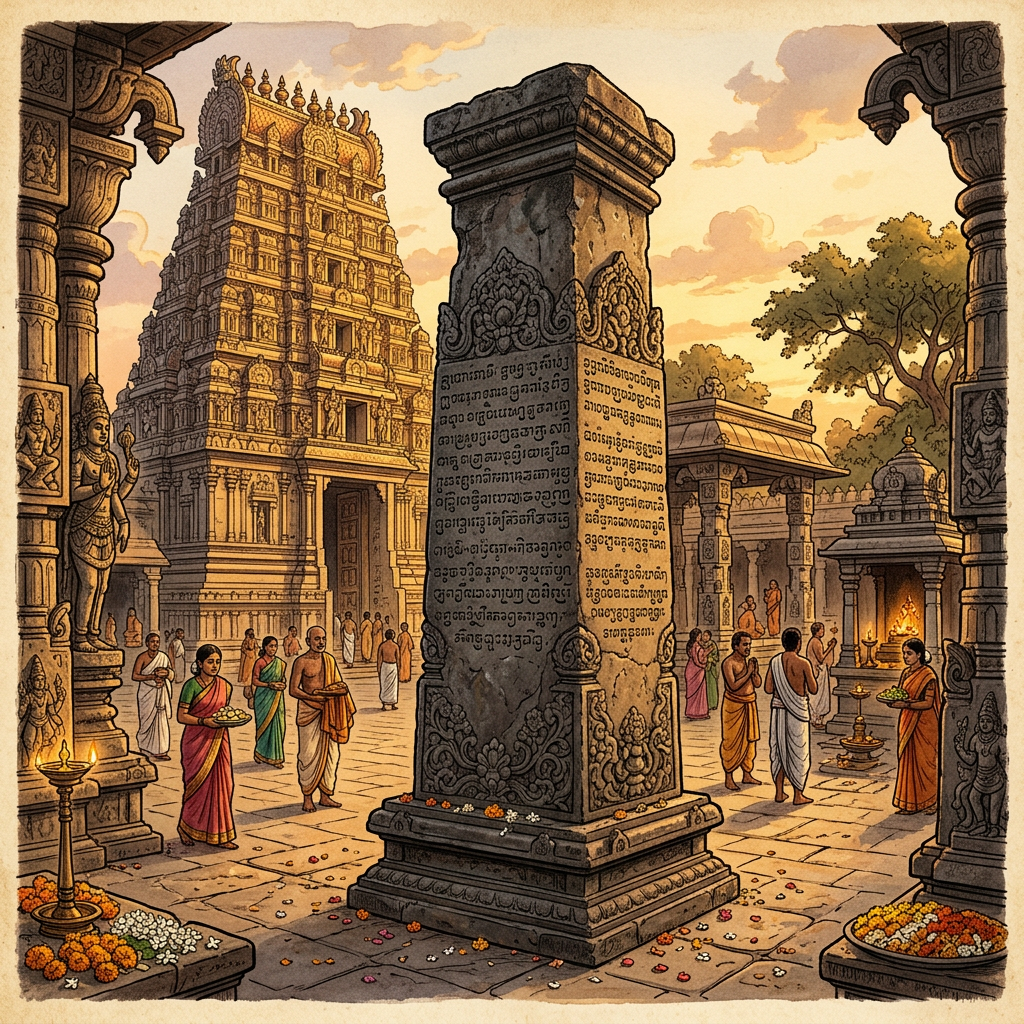
Recent excavations near the base of an ancient temple in Kanchipuram have revealed granite slabs inscribed with the 'Karuna-Darshana', an 8th-century philosophical text written in a hybrid Grantha-Tamil script. The text articulates a unique synthesis where the Vedic concept of 'Dharma' is redefined through the lens of 'Arul' (grace/compassion), advocating for a social ethics based on the inherent divinity of all sentient beings.
Epigraphists suggest that these inscriptions represent a deliberate effort by medieval sages to bridge the gap between orthodox Sanskrit philosophy and the emerging Bhakti traditions of South India. The discovery provides archaeological evidence for a "philosophy of inclusivity" that pre-dates the major philosophical reforms of the later Middle Ages.