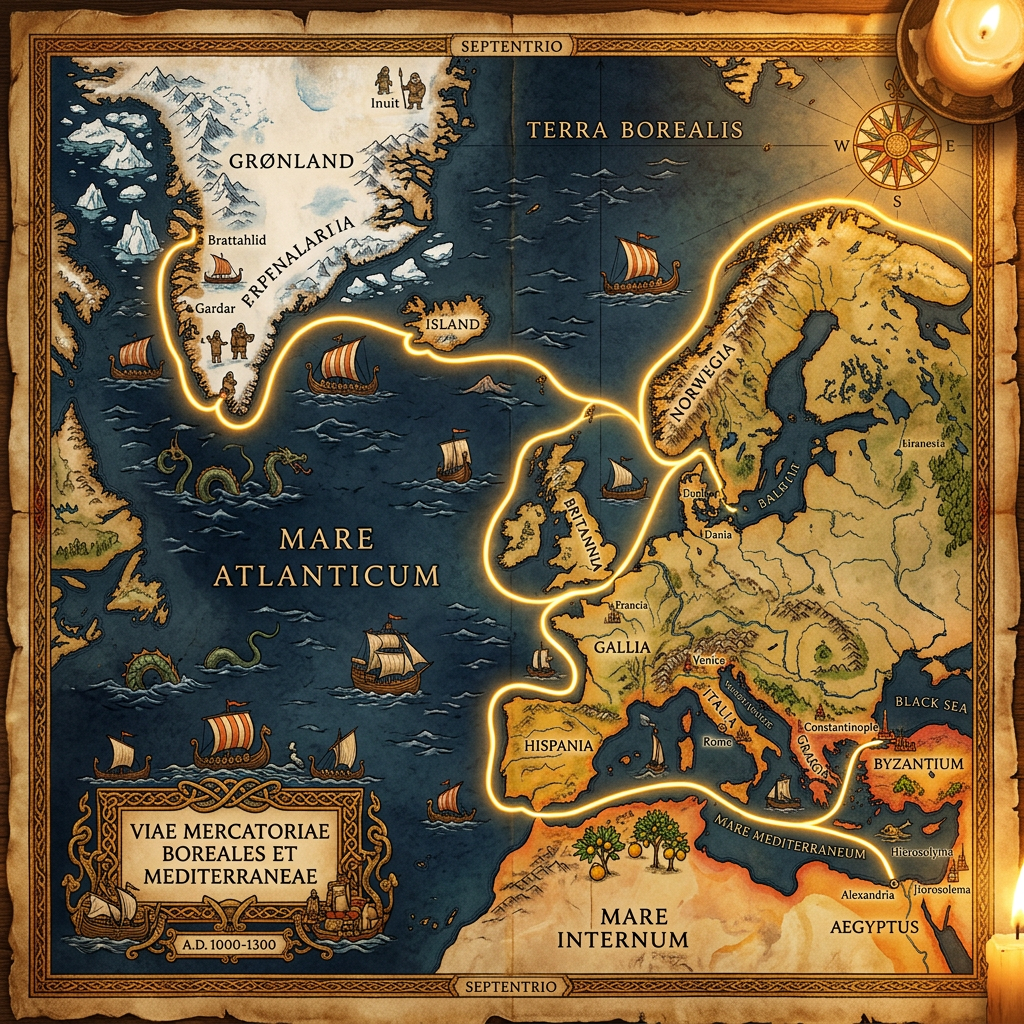
New genomic and isotopic analysis of walrus ivory fragments found in Istanbul has confirmed the existence of a direct, long-distance trade route known as the 'Walrus Ivory Seaway.' Researchers discovered that ivory tusks harvested by Norse settlers in Greenland were transported through Arctic waters to Russia and eventually reached the heart of the Byzantine Empire, where they were carved into high-status religious icons and luxury goods.
This discovery refutes the long-held belief that Greenland was an isolated outpost. Instead, it suggests that the Arctic was a vital node in a globalized medieval economy. The ivory trade provided the Norse with the wealth necessary to import European grain and metals, while the Byzantines gained access to a material they prized as highly as elephant ivory.