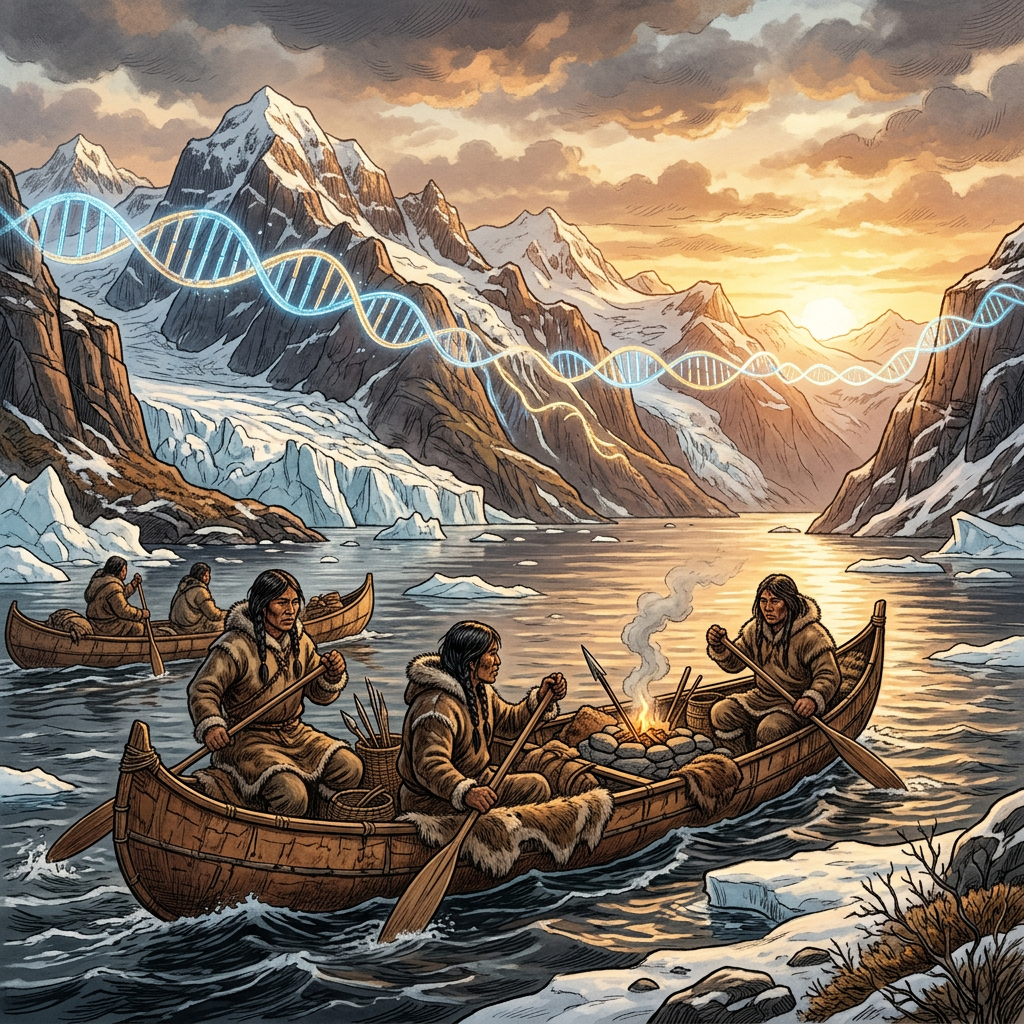
A groundbreaking paleogenomic study published in Nature Ecology & Evolution has sequenced the genomes of 11,000-year-old remains from the southernmost tip of South America. The research identifies a previously unknown 'ghost lineage' that displays the earliest known genetic adaptations to sub-antarctic marine environments, specifically in genes associated with thermogenesis and high-fat lipid metabolism.
The study suggests that these early maritime hunter-gatherers developed specialized physiological traits for surviving the extreme cold of the Patagonian fjords much earlier than previously thought. This genetic signature differentiates them from northern Andean populations, highlighting a rapid diversification of human lineages shortly after their arrival in the southern cone.