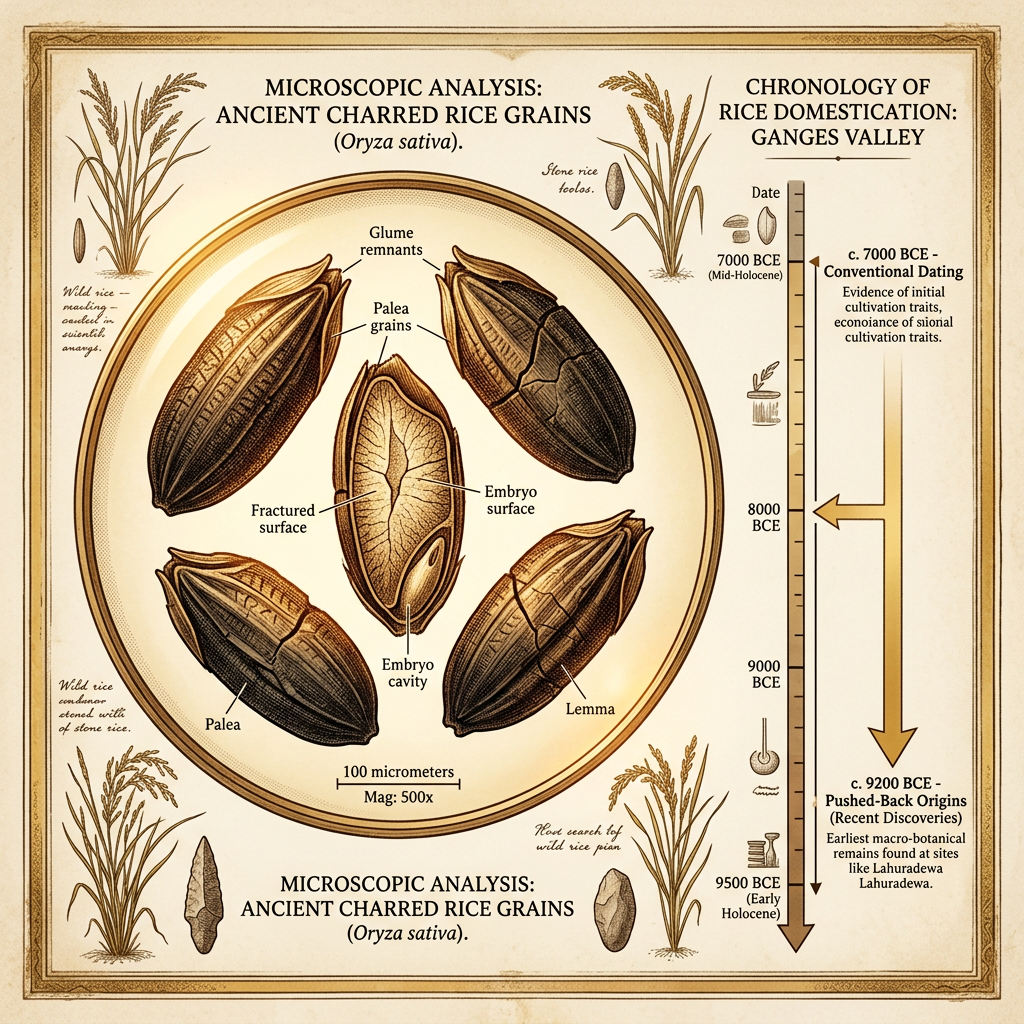
New research utilizing Argon-Plasma Sedimentary Chronometry has provided a significant update to the timeline of agriculture in South Asia. Scientists analyzing phytoliths and charred grains from the middle Ganges basin have confirmed the presence of domesticated rice varieties dating back to 9200 BCE, nearly two millennia earlier than existing estimates for the region.
This study, appearing in the Journal of Archaeological Science, validates the theory that the Ganges Valley was an independent center of crop domestication, rather than receiving the technology solely from East Asia. The findings show a clear progression from wild Oryza nivara to domesticated Oryza sativa, accompanied by sophisticated water management traces in the surrounding soil layers.