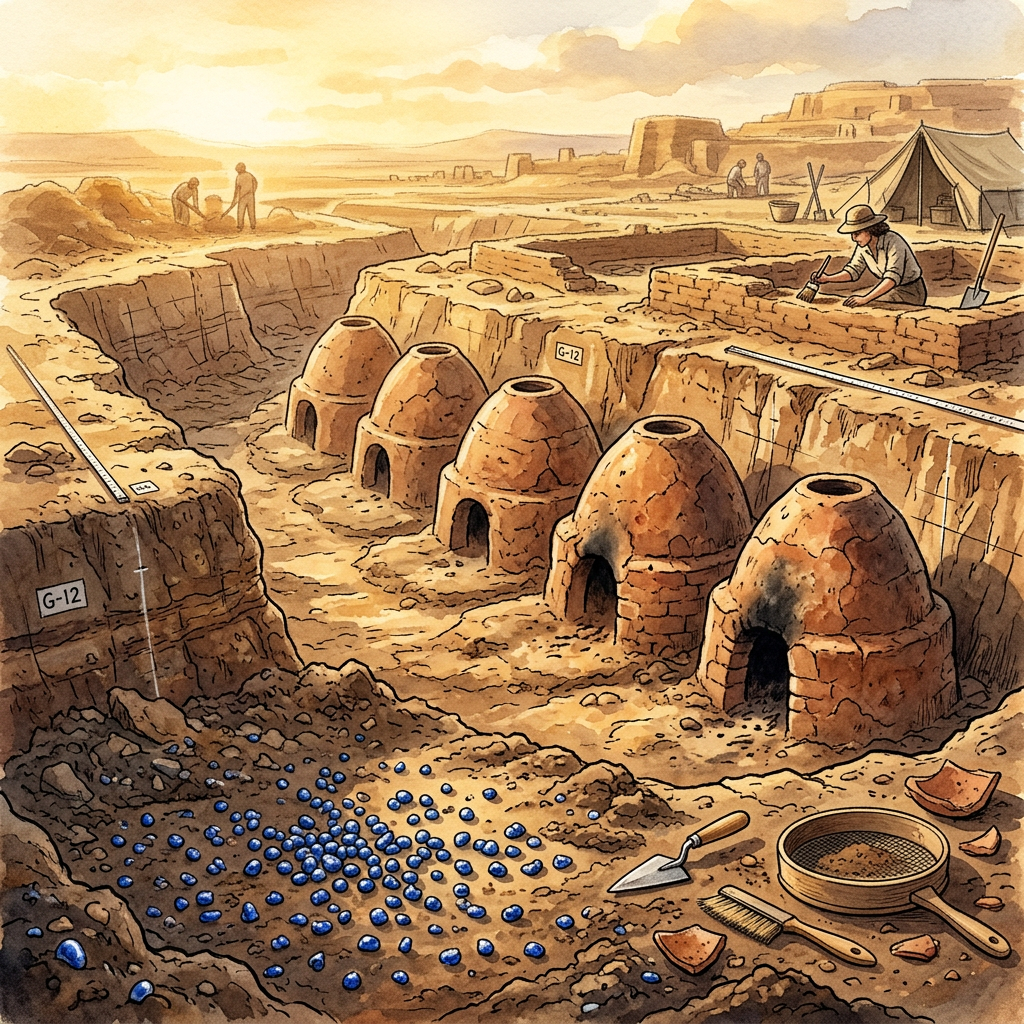
New excavations at a previously unrecorded Mature Harappan site in the Sabarmati river basin have revealed a high-precision faience-working industrial zone. Archaeologists uncovered a series of specialized kilns designed to reach the exact temperatures required for glazing silica-based paste into the iconic blue-green 'faience' jewelry highly prized throughout the Indus Valley and exported to Mesopotamia.
The site yielded thousands of micro-beads and miniature vessels in various stages of production, along with ceramic crucibles containing traces of copper-based pigments. This discovery suggests that specialized industrial satellite towns existed far from major urban centers like Lothal, focusing exclusively on high-value synthetic materials for the global trade network of 2500 BCE.