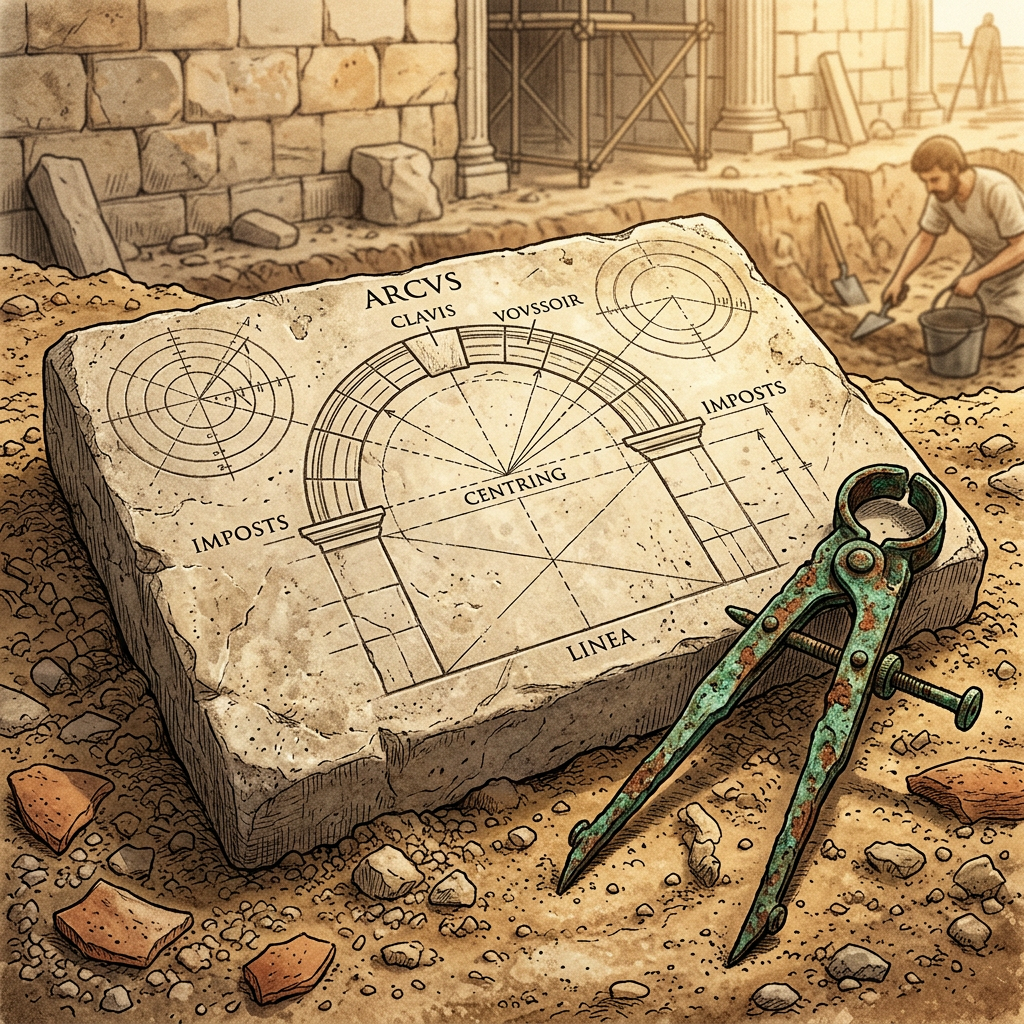
Excavations in the ancient Roman city of Augusta Emerita have brought to light a unique Imperial Civil Engineering Bureau. The office, which served as a regional hub for public works, contains rare stone templates used by Roman architects to standardize the construction of bridge arches and aqueducts across the province of Lusitania.
Archaeologists recovered bronze drafting compasses and marble slabs inscribed with geometric calculations for structural load distribution. Experts state that this find is unprecedented, as it offers the first physical evidence of the standardized 'blueprints' that allowed the Roman Empire to replicate complex infrastructure projects with consistent precision throughout its vast territories.