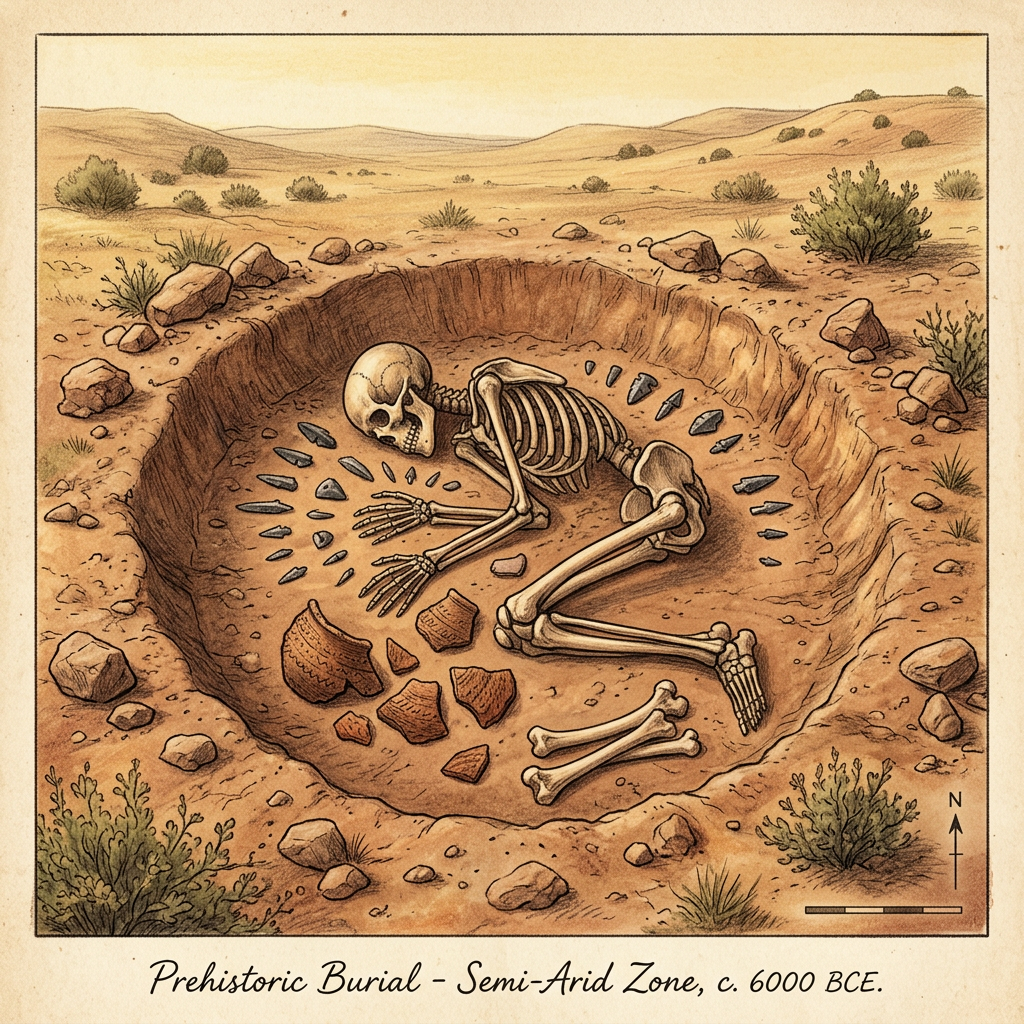
A breakthrough paleogenomic study published in Cell Research has analyzed the genomes of 6,000-year-old skeletal remains from Langhnaj, a key Mesolithic site in Gujarat. The analysis identifies a distinctive genetic signature characterized by adaptations for desert survival, including metabolic resilience to aridity and specialized renal functions for water conservation.
The research provides the first direct evidence of a localized 'ghost lineage' that thrived in the semi-arid corridors of Western India before the onset of the Neolithic transition. This population appears to have remained genetically isolated for millennia, contributing unique alleles to modern communities in the Thar Desert and surrounding regions.