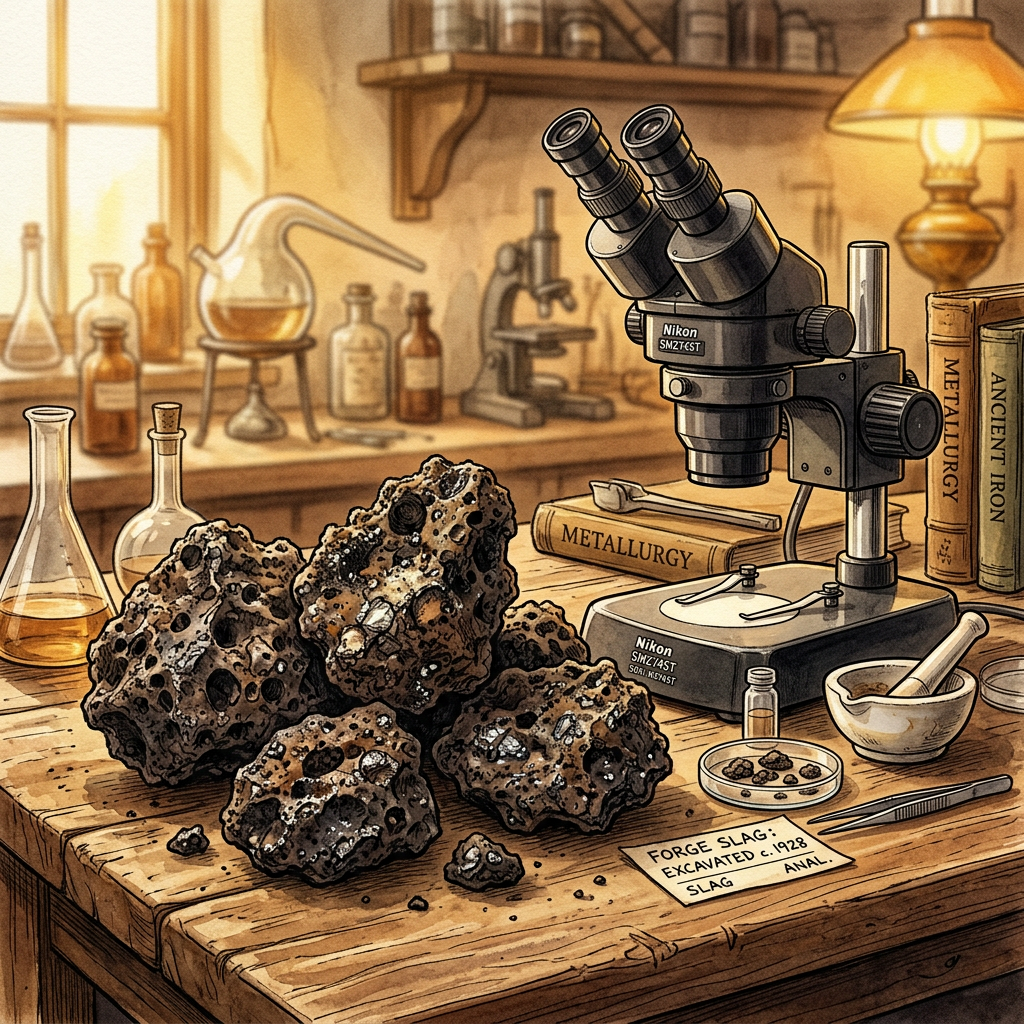
A recent isotopic analysis of slag heaps at the 3rd century BCE site of Dharanikota in Andhra Pradesh has unveiled evidence of a specialized metallurgy industry during the Mauryan period. Researchers from the Indian Institute of Technology (IIT) found that ancient smiths were producing a unique form of manganese-steel, which exhibits superior toughness and resistance to wear, suggesting a high degree of empirical knowledge in alloying.
This study demonstrates that Mauryan engineers intentionally selected manganese-rich ores to achieve specific structural properties for heavy-duty tools and armaments. The discovery challenges previous assumptions that such precision was only achieved in the later medieval period, pushing back the timeline for specialized steel production in the Deccan region.