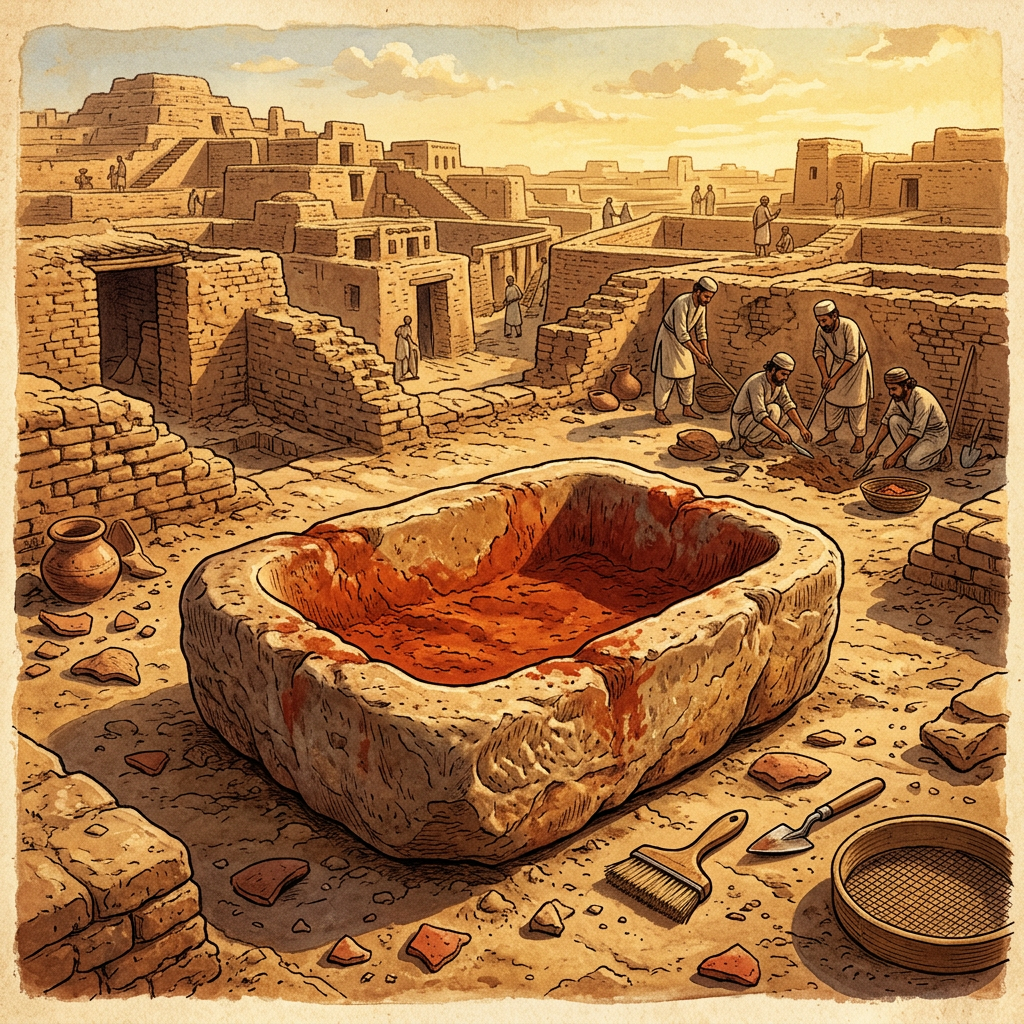
Archaeologists working in the Harappan city of Dholavira in Gujarat have identified a series of unique ritual basins coated with high concentrations of cinnabar (mercuric sulfide), a vibrant red pigment. The basins are located within a grand processional plaza, suggesting they were used for the communal mixing and distribution of colored powders during Bronze Age agricultural festivals. This discovery offers compelling evidence that the tradition of using bright pigments in seasonal celebrations, central to the modern festival of Holi, may have originated in the Indus Valley Civilization over 4,000 years ago.
Chemical analysis of the surrounding soil also revealed traces of floral resins and oils, indicating that the pigments were often scented. The researchers suggest that these festivals were held to mark the transition from winter to spring, acting as both a religious rite to ensure soil fertility and a social mechanism for community bonding. The find highlights the deep-seated cultural importance of color in South Asian heritage.