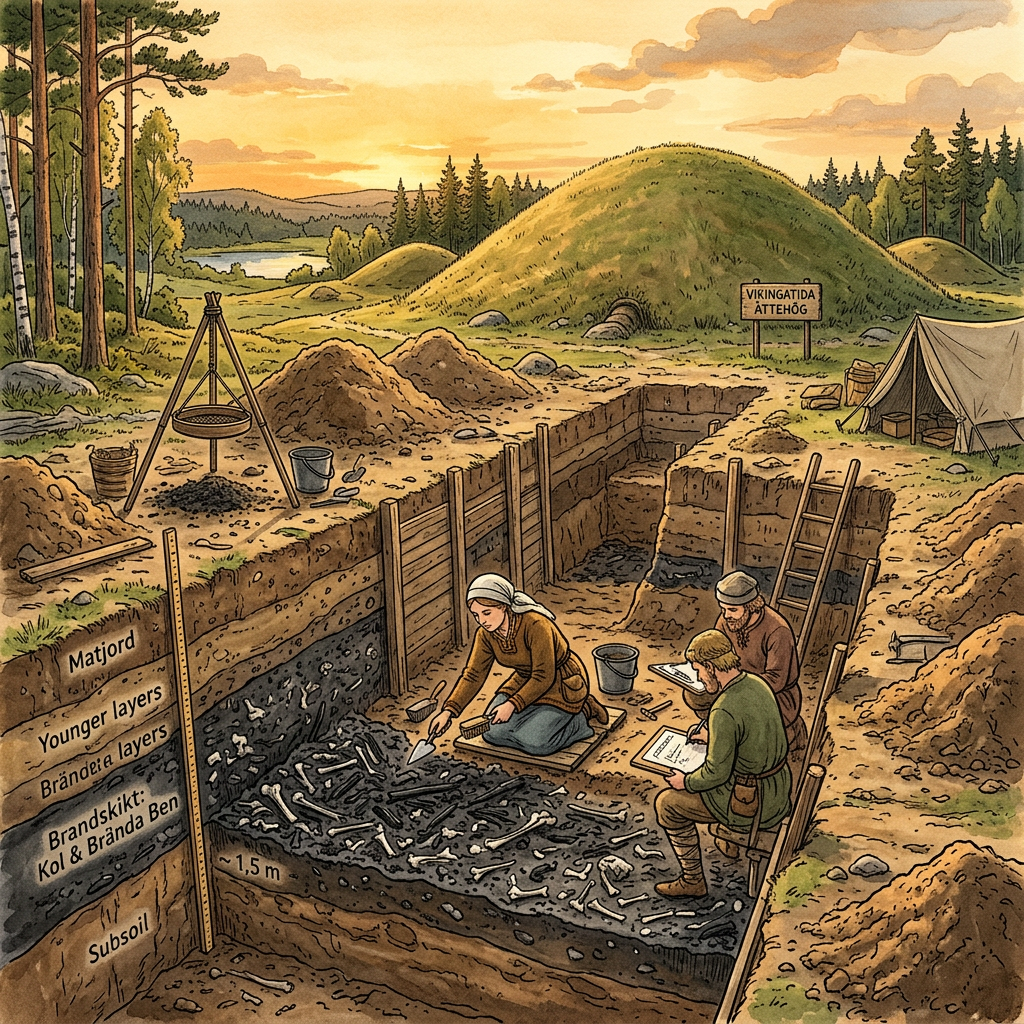
A major archaeological project at the historic site of Gamla Uppsala in Sweden has uncovered a complex of subterranean pits filled with evidence of massive Sigrblót sacrifices. These "Victory Sacrifices" were held annually at the start of spring to ensure favorable winds for Viking summer voyages and successful harvests. The pits contain the charred remains of cattle, horses, and sheep, along with ceremonial iron spears that were ritually bent or broken before being deposited in the earth to symbolize the end of winter's grip.
The scale of the find suggests that Gamla Uppsala served as a central pilgrimage hub where thousands gathered for multi-day festivals involving feasting and athletic competitions. By analyzing the carbonized grain found alongside the animal remains, researchers have determined that the timing of these festivals was strictly tied to the first full moon following the spring equinox, providing a clear astronomical link to the origins of the Norse ritual calendar.