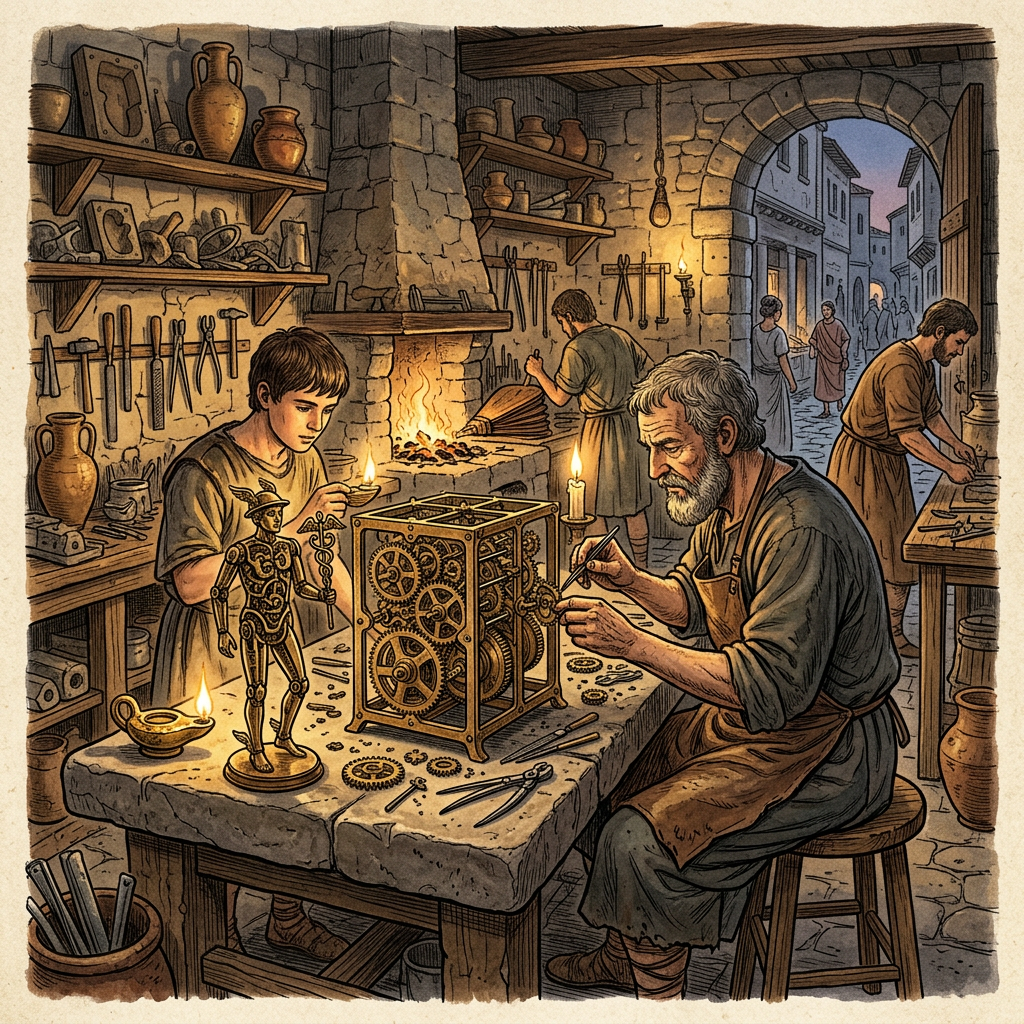
Excavations in the industrial sector of Ancient Corinth have revealed a workshop specializing in the production of complex mechanical devices. Archaeologists found a series of bronze gears, pulleys, and articulated joints that were once part of a large-scale automaton. The discovery includes templates for moving human and animal figures, which were likely used for theatrical spectacles or as high-status domestic curiosities.
This find confirms that the tradition of the Antikythera Mechanism was not an isolated marvel but part of a broader Roman-era industry of mechanical engineering. The workshop also yielded several lead weights and hydraulic pipes, indicating that some of these bronze figures were powered by gravity-fed water systems to create life-like movements, such as a bird fluttering its wings or a seated figure pouring wine.