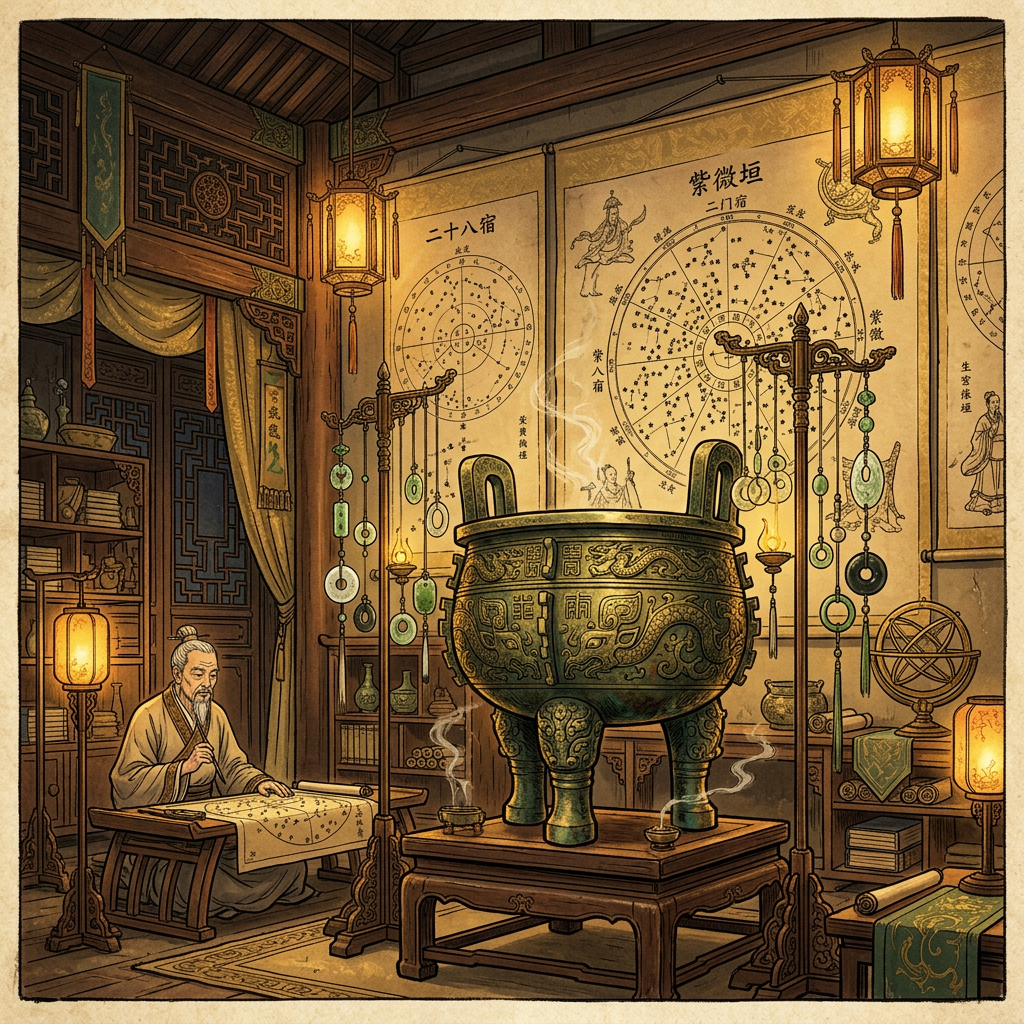
Chinese archaeologists have excavated a ritualistic and scientific chamber in Shaanxi Province dating back to the early Zhou Dynasty. The chamber features a central pedestal surrounded by jade-inlaid bronze vessels containing mercury. Experts believe this setup served as a primitive yet effective seismology station, designed to detect subtle tremors in the earth that preceded larger volcanic or tectonic events.
The orientation of the bronze sensors is meticulously aligned with the cardinal directions. Accompanying the vessels were several divinatory oracle bones that record historical tremors and their perceived connection to the 'Mandate of Heaven.' This discovery suggests that ancient Chinese civilizations had a formalized system for monitoring and documenting geological activity centuries before the invention of the Zhang Heng seismoscope.