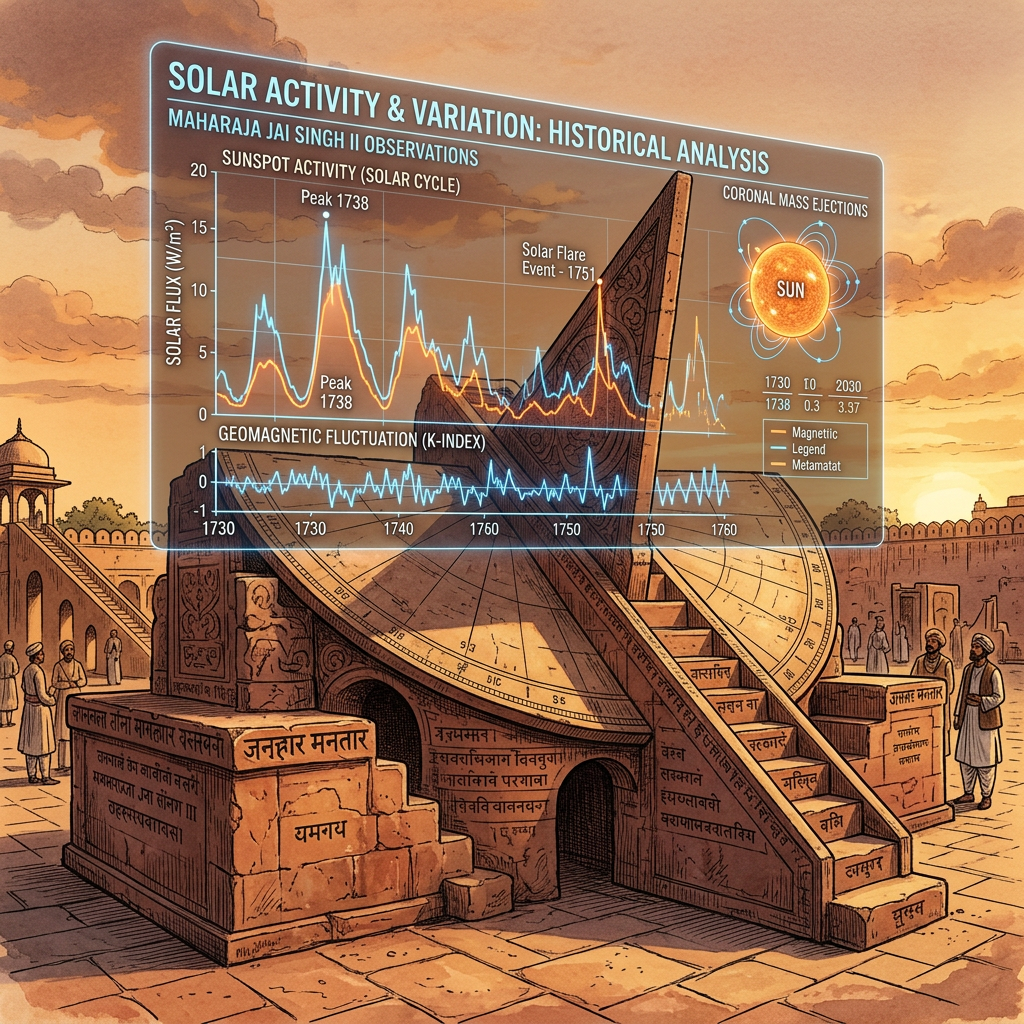
A computational analysis of the Vakya-Karana, a 10th-century astronomical manual, has revealed that medieval Indian astronomers utilized advanced mathematical algorithms to model trans-centennial solar flare cycles. By digitizing the Sanskrit verses and applying modern time-series analysis, researchers discovered that the text contains periodic functions that correlate with known solar minimums and maximums over a 400-year period.
This study suggests that ancient observers were not only tracking planetary positions but were also keeping meticulous records of sunspot activity and coronal mass ejections, which they interpreted through a complex system of mathematical ratios. The research validates the precision of 10th-century Indian observational astronomy and its ability to detect long-term celestial patterns that are only now being fully understood by modern heliophysics.