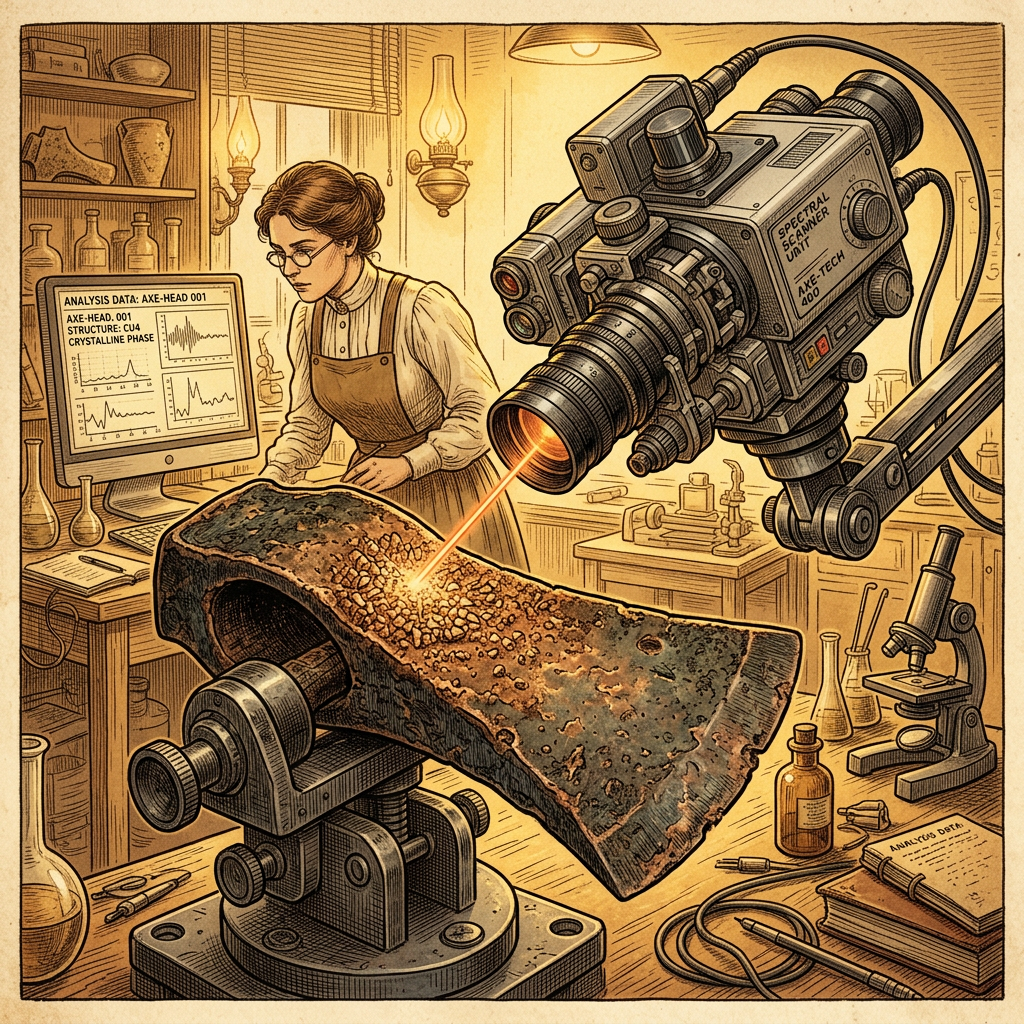
A groundbreaking research paper published in The Journal of Archaeological Science has introduced a novel dating technique called Muon-Resonance Spectroscopy. This method allows researchers to analyze the internal crystalline structure of ancient copper artifacts without invasive sampling. By applying this to the 'Copper Hoard' culture of the Upper Ganges, researchers have successfully pushed back the timeline of advanced smelting in the region to approximately 3100 BCE, nearly five centuries earlier than previously estimated.
The study, led by an international team of metallurgists and archaeologists, reveals that these ancient smiths were employing a sophisticated controlled-atmosphere reduction process. This technique minimized impurities like sulfur and lead, resulting in high-purity copper that exhibits remarkable structural integrity. The findings suggest a much more complex and early indigenous development of metallurgical science in the Indian subcontinent than was previously documented in standard archaeological texts.