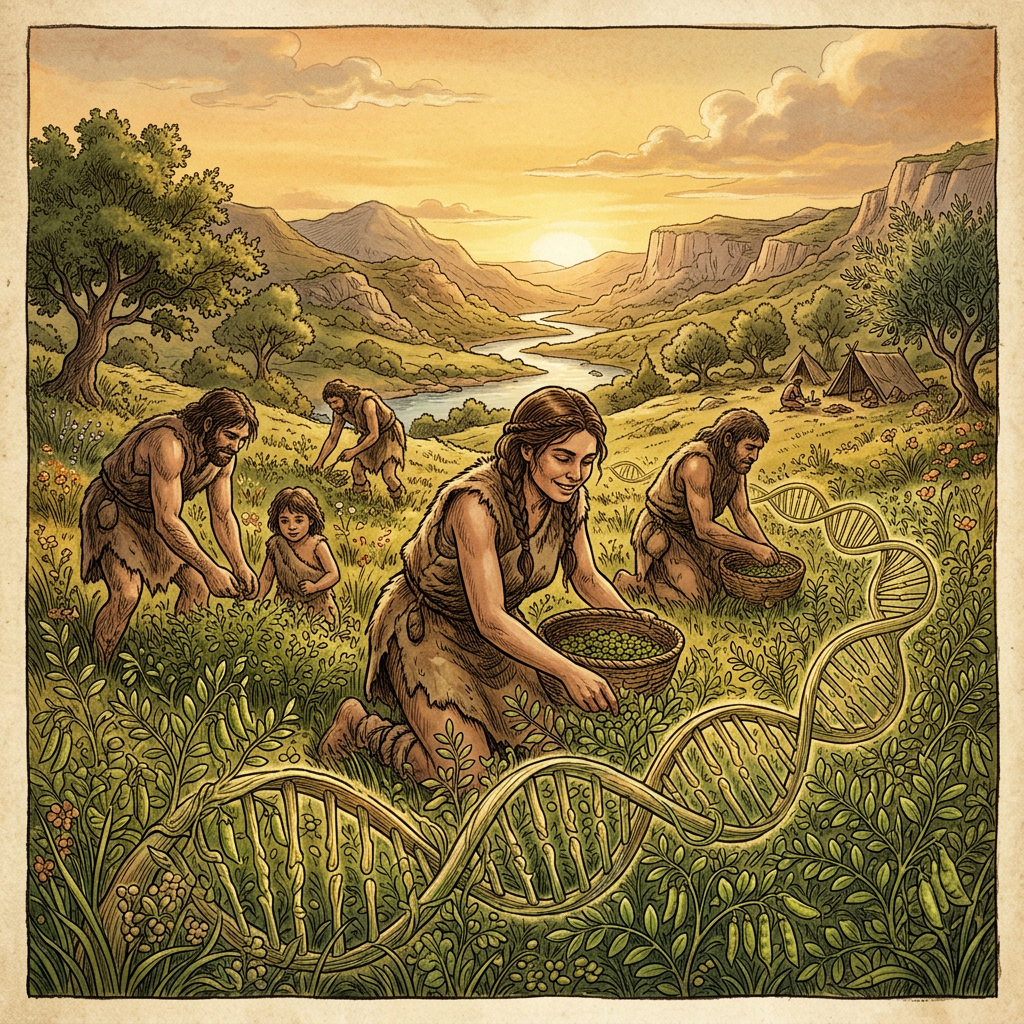
A major study in Cell has analyzed the genomes of 11,000-year-old remains from the Levant-Epipaleolithic transition. The findings reveal a unique genetic divergence among these early foragers that coincides exactly with the first evidence of wild pulse (lentil and pea) selection. This genetic shift is associated with an increased capacity for metabolizing complex carbohydrates and legume-specific proteins, marking the very earliest human adaptation to a localized proto-agricultural diet.
The research identifies this group as a distinct sub-population that remained genetically isolated for several centuries, refining their selection of wild crops. This suggests that the transition to farming was not a sudden revolution but a slow, genetically-driven co-evolution between humans and the specific plant species of the Fertile Crescent, occurring much earlier than the domestication of cereals like wheat or barley.