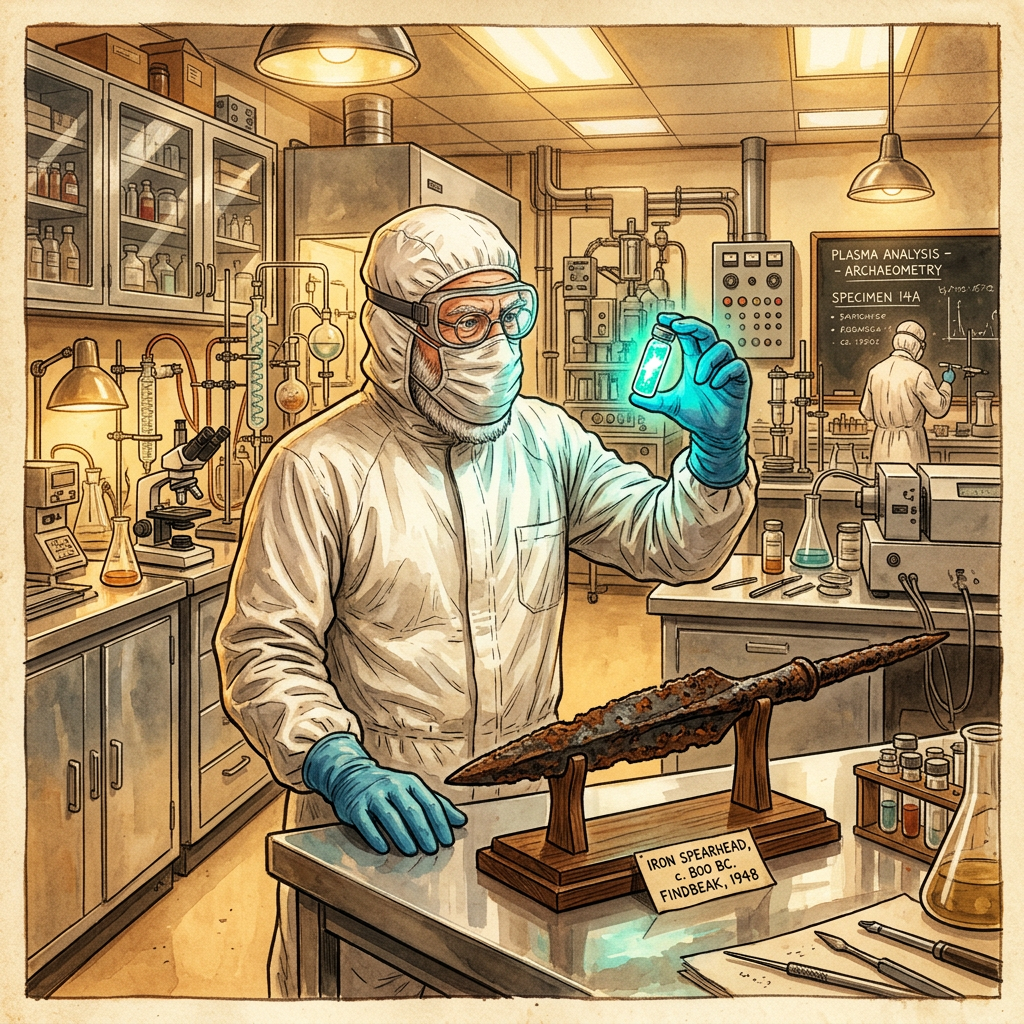
Dating the transition from the Neolithic to the Iron Age in Southern India has long been a challenge due to the 'plateau' effect in traditional radiocarbon curves. However, a new study published in Science introduces Argon-Plasma Isotopic Refinement, a technique that analyzes trace noble gases trapped in iron slag. This method has achieved decadal-scale precision, firmly dating the emergence of large-scale iron production in the Godavari basin to exactly 1180 BCE (±10 years).
This precision allows archaeologists to correlate the technological shift with specific environmental changes recorded in local stalagmites. The data shows that the rapid expansion of iron weaponry and tools was a direct response to a sustained aridity pulse, which forced sedentary farming communities to adopt more efficient clearing and irrigation technologies. This research provides a new chronological anchor for the history of technology in the Indian Ocean world.