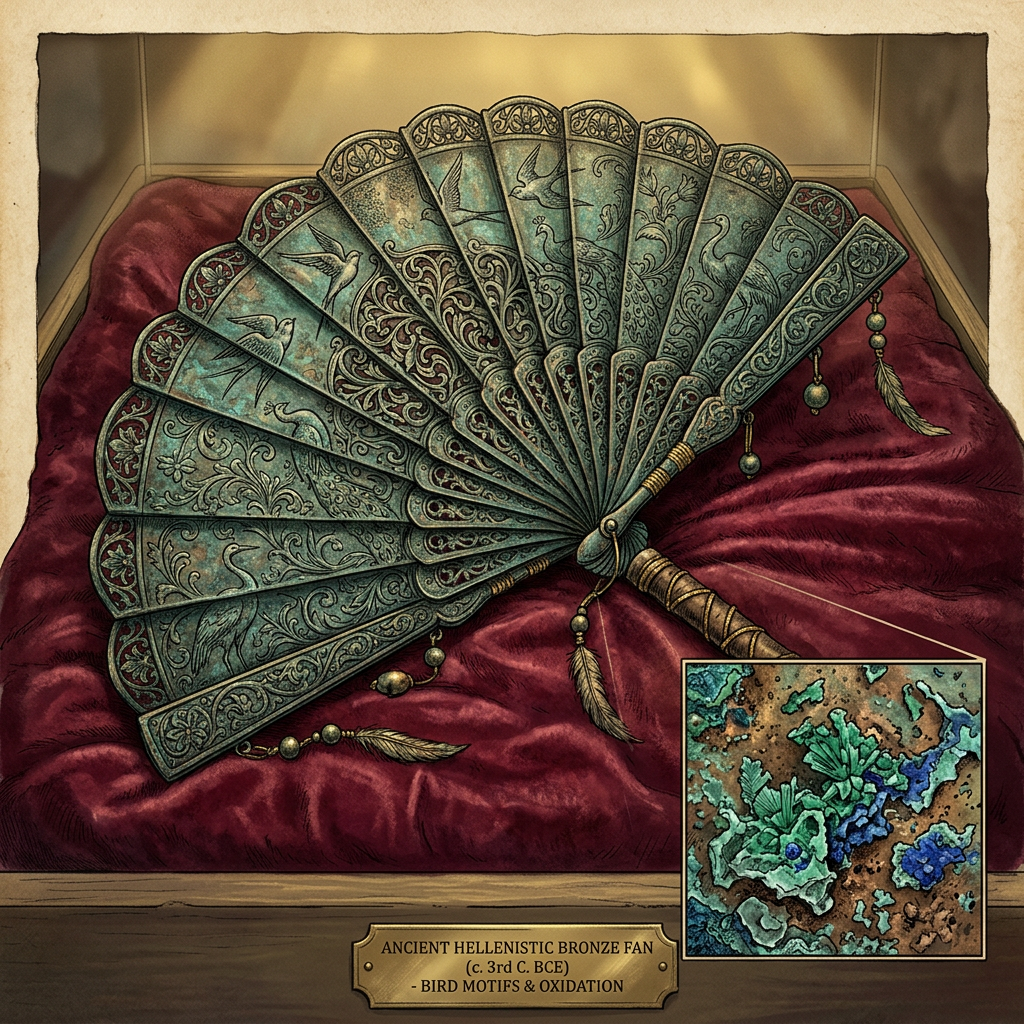
A recent excavation in Jiangxi Province has revealed a collection of ornate copper-leaf fans dating back to the late Bronze Age Chu State. These delicate artifacts, featuring intricate carvings of phoenixes and clouds, were discovered in a ceremonial tomb dedicated to a priestess. Experts suggest these fans were central to the 'Dancing of the Spring Zephyr,' a forgotten festival meant to welcome the floral blooming season.
This find is significant as it provides physical evidence of the aesthetic and ritual origins of modern Han Chinese flower festivals. The presence of residual floral pollens on the metal surfaces suggests the fans were used to scatter petals during rhythmic processional dances, a tradition that survives in various forms in contemporary regional folklore.