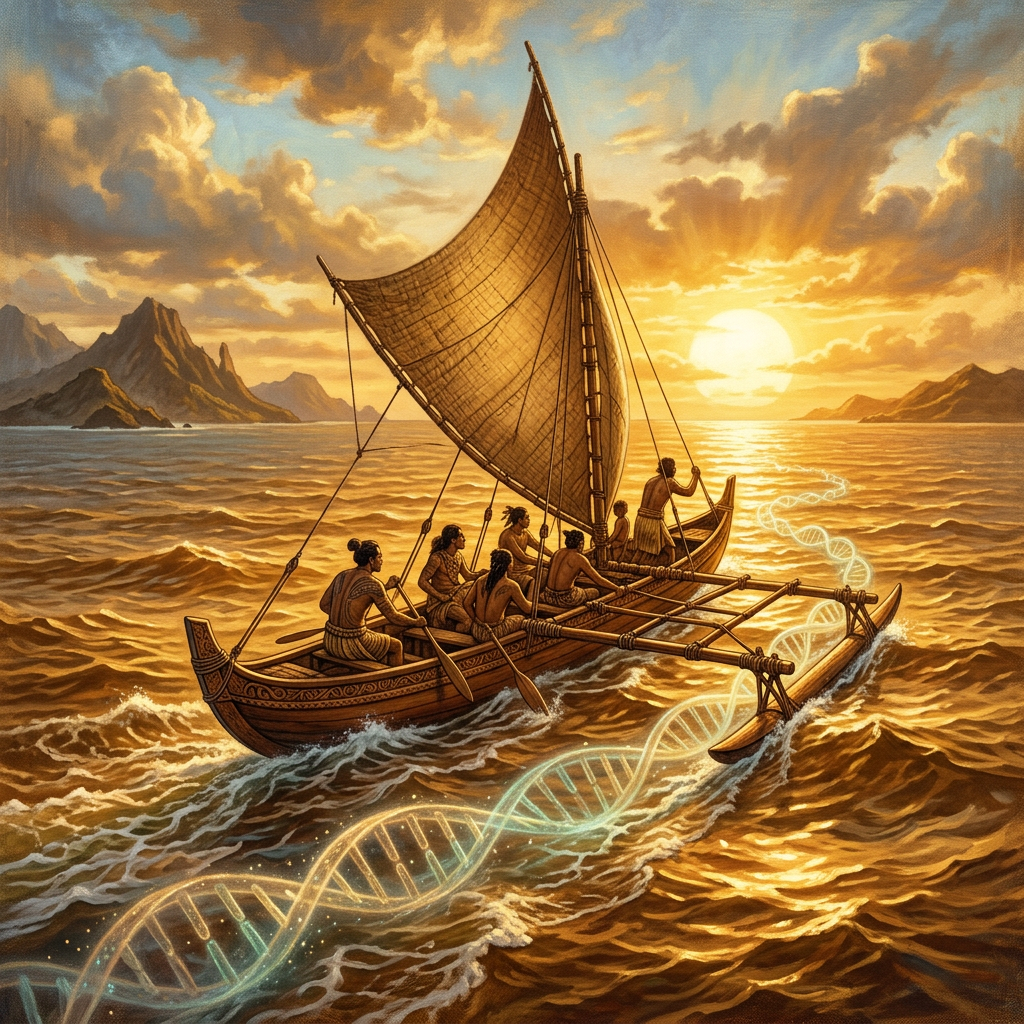
A large-scale genomic study published in Anthropology & Genomics World has identified a previously unknown 'ghost lineage' in the DNA of 10,000-year-old remains from the Bismarck Archipelago. This lineage, which diverged from other Southeast Asian populations over 40,000 years ago, represents a distinct group of maritime foragers who mastered deep-sea navigation during the Pleistocene.
The genetic evidence indicates that this group remained isolated for millennia, developing unique physiological adaptations for a marine-based diet and high-salinity environments. The study suggests that these early explorers provided the demographic foundation for later Austronesian migrations, contributing essential maritime knowledge and genetic diversity to the populations that eventually settled the remote Pacific islands.