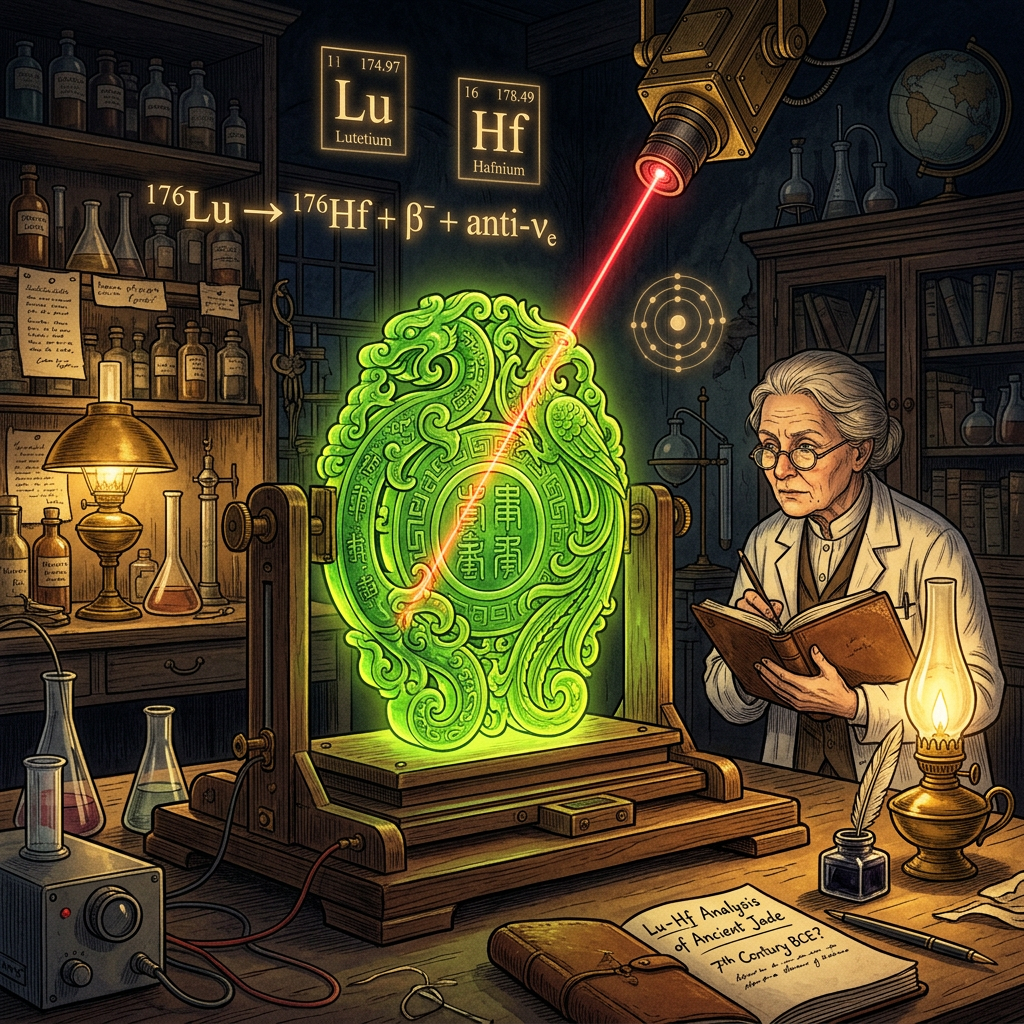
Archaeologists have successfully applied a novel Lutetium-Hafnium (Lu-Hf) isochron dating technique to Neolithic jadeite tools from the Yangtze River Delta, according to a report in Geoarchaeology Reviews. This methodology allows for the precise dating of the crystallization of individual mineral grains within the jade, providing a direct timeline for when the raw materials were extracted and worked by ancient artisans.
The results have refined the chronology of the early Liangzhu culture, pushing back the development of advanced lithic polishing and carving techniques by nearly 300 years. This breakthrough offers a new tool for archaeologists to trace the evolution of complex social stratification and trade networks in East Asia, as the high-precision dates help differentiate between local production and long-distance exchange of luxury goods.