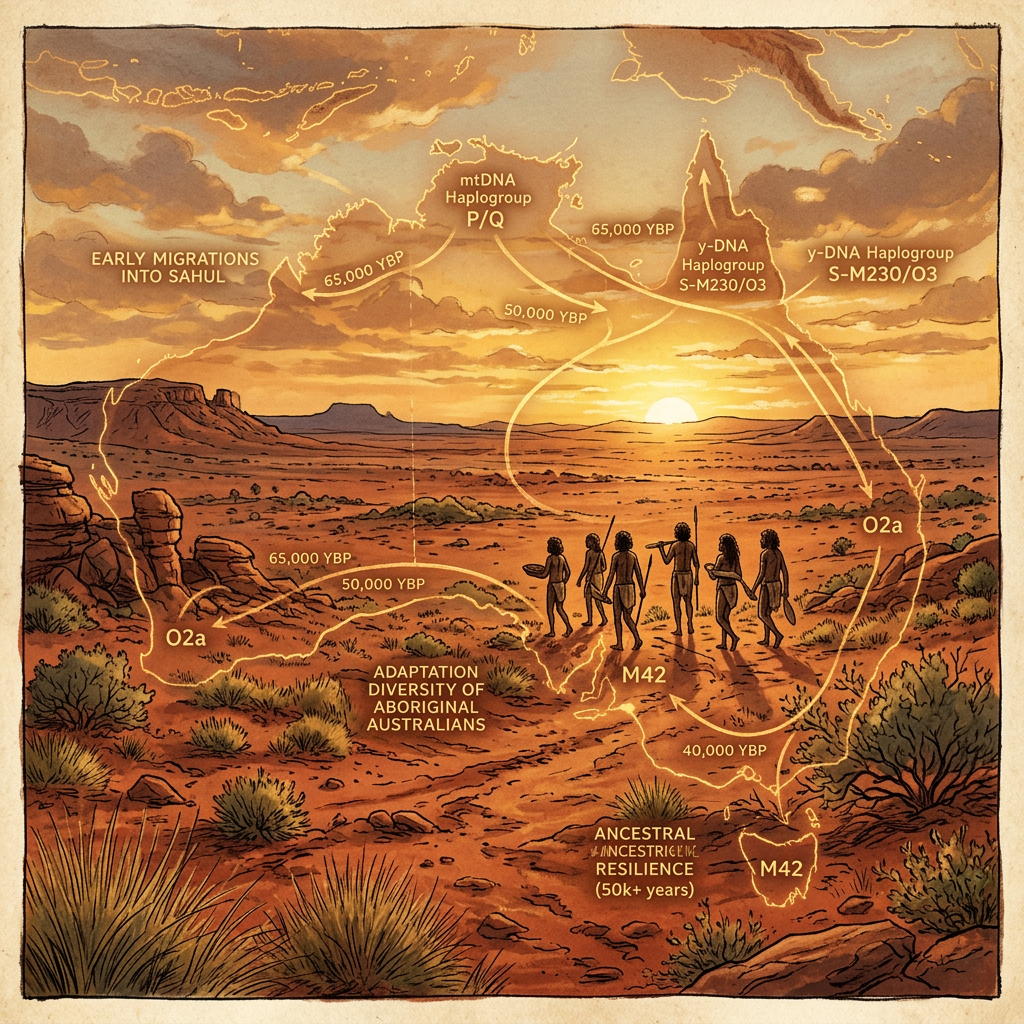
A large-scale genomic study of remains from the Sahul shelf (the landmass that once connected Australia and New Guinea) has identified the earliest known genetic adaptation to extreme aridity pulses. The research, published in Genetics Today, highlights a specific set of metabolic markers that allowed early inhabitants to survive the severe drought cycles of the late Pleistocene.
By comparing the ancient DNA with modern Aboriginal Australian and Papuan populations, the scientists identified a persistent genetic legacy of water-conservation traits. This study provides a vital link in understanding how early modern humans managed to navigate and colonize the interior of one of the world's harshest environments during periods of rapid climate change.