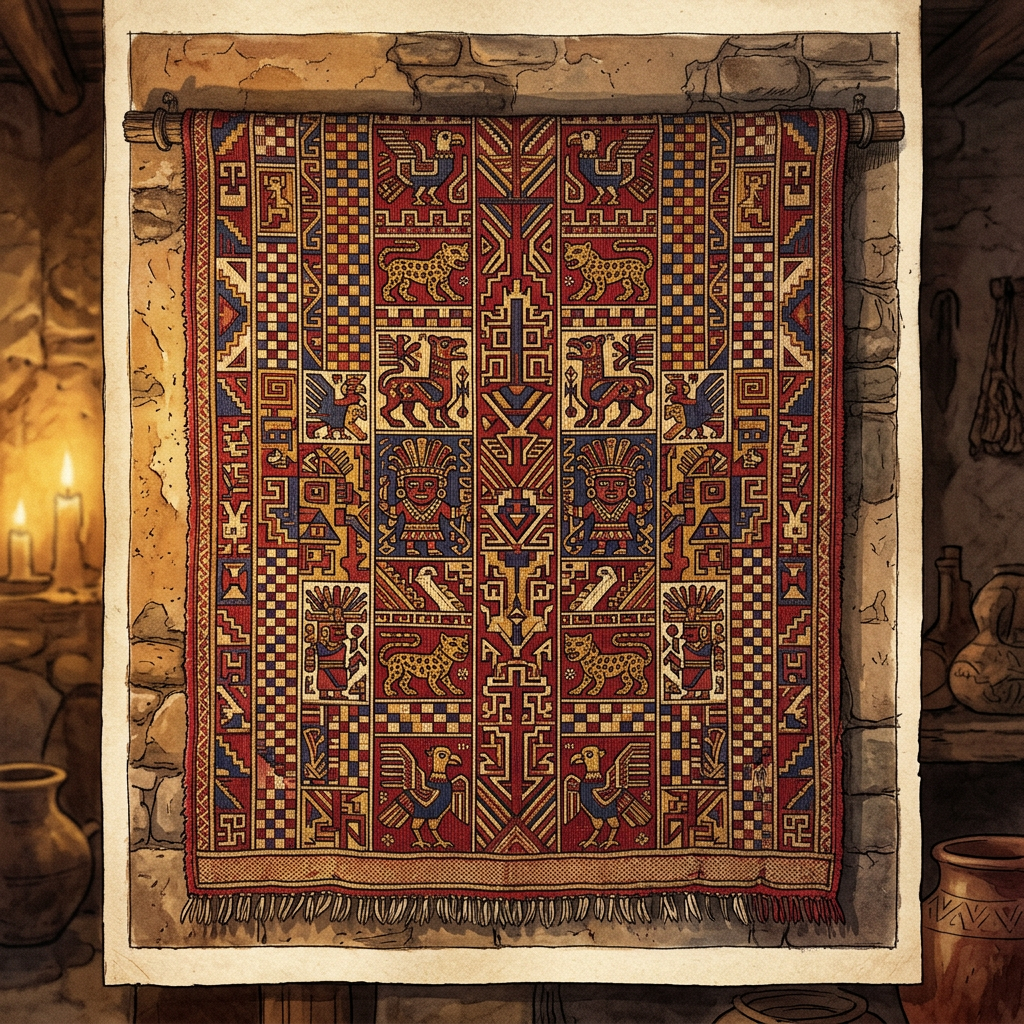
In the arid coastal plains of Peru, archaeologists have unearthed a perfectly preserved textile from the Paracas culture, dated to approximately 300 BCE. The tapestry is inscribed with intricate geometric patterns that researchers identify as a visual representation of the philosophy of 'Yanantin', or the balance of reciprocal opposites. This Andean wisdom tradition emphasizes that every force in nature has a necessary counterpart, and that health—both social and physical—depends on maintaining the equilibrium between them.
This discovery provides the earliest physical evidence of a formal metaphysics of duality in South America. The iconography suggests that the Paracas people viewed the world not as a series of conflicts, but as a harmonious dialogue between opposing elements like the highlands and the coast, or the living and the dead.