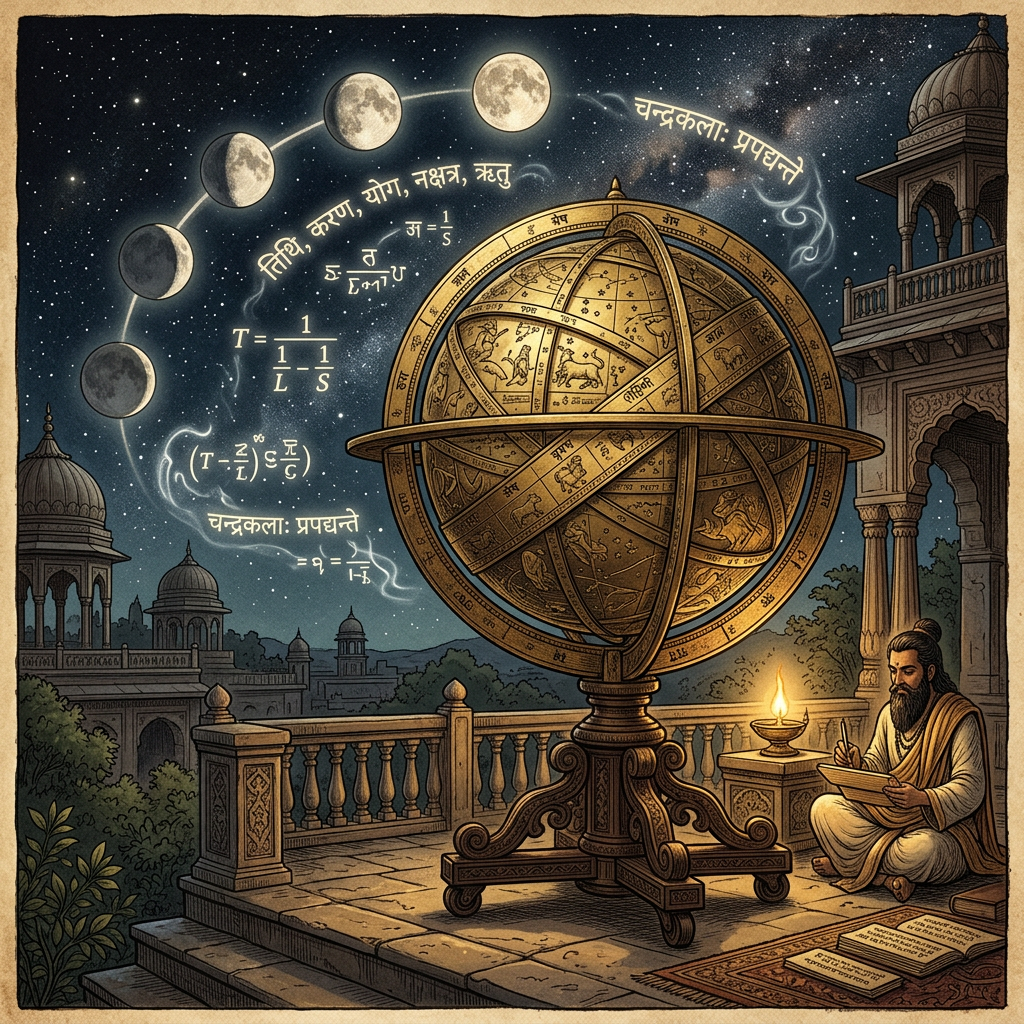
A new research paper published in the Journal of History of Astronomy explores the mathematical complexity of the Vakya-Paddhati system. The study utilizes computational modeling to validate 10th-century Sanskrit algorithms used to calculate lunar parallax, finding that ancient astronomers had developed recursive methods that effectively accounted for non-linear variations in the moon's position.
The research demonstrates that these algorithms achieved a degree of accuracy that was not matched in the Western world until the late Renaissance. These findings underscore the sophistication of the Vakya school of mathematics, which prioritized rapid, mnemonic-based calculation strings for high-precision observational astronomy without the need for complex instruments.