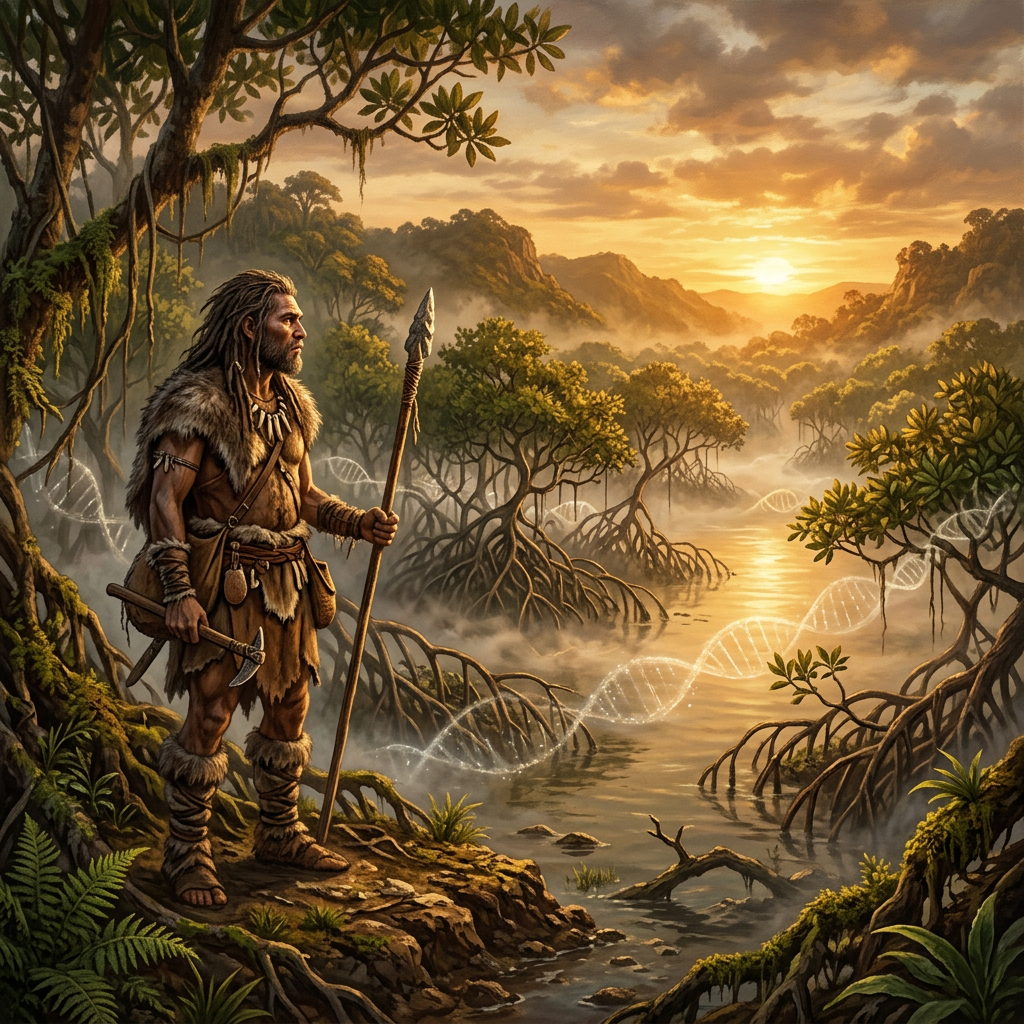
A breakthrough paleogenomic study published in Nature Ecology & Evolution has revealed the first known genetic signature of human adaptation to mangrove-heavy deltaic environments. Researchers analyzing remains found in the Sundarbans region, dating back to the late Pleistocene, identified specific gene variants associated with the metabolism of marine-based toxins and high-salinity diets.
The study, led by an international consortium of geneticists and archaeologists, suggests that these ancient populations developed a unique biological resilience to the fluctuating water levels and specific pathogens found in coastal wetlands. This genetic pulse distinguishes the 'Sundarbans deltaic lineage' from other contemporary hunter-gatherer groups in the Indian subcontinent, highlighting a specialized evolutionary path for early maritime settlers.