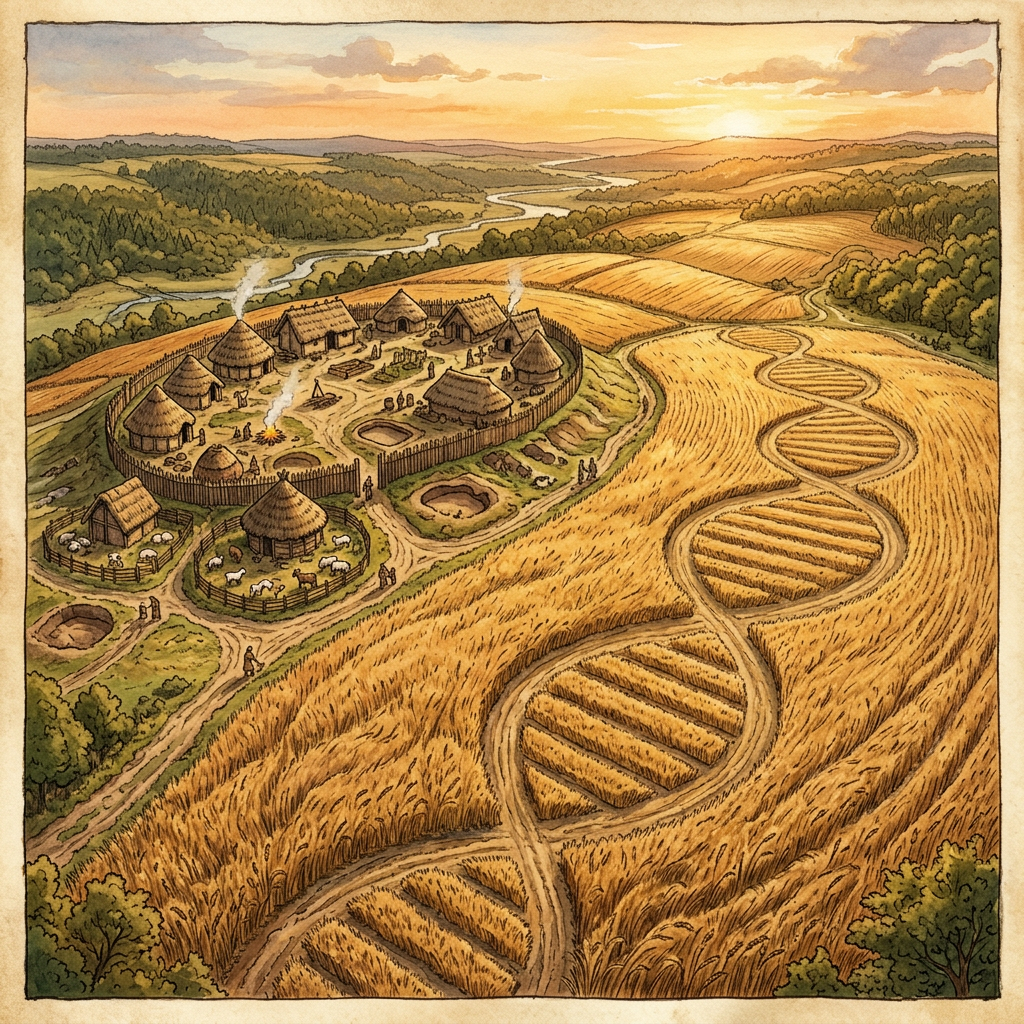
New research published in The Anthropological Review maps the genomic history of the transitional zone between the Malwa Plateau and the northern Deccan. The study identifies a significant genetic shift approximately 5,000 years ago, coinciding with the adoption of monsoon-resistant millet varieties such as finger millet and pearl millet.
The findings indicate that the transition to agriculture in this region was driven by a migration of diverse lineages that intermixed with local hunter-gatherers, creating a unique genetic pool optimized for high-heat, semi-arid farming. This genomic evidence supports the theory that early Indian farmers utilized sophisticated crop-rotation strategies to mitigate the effects of an increasingly erratic monsoon cycle.