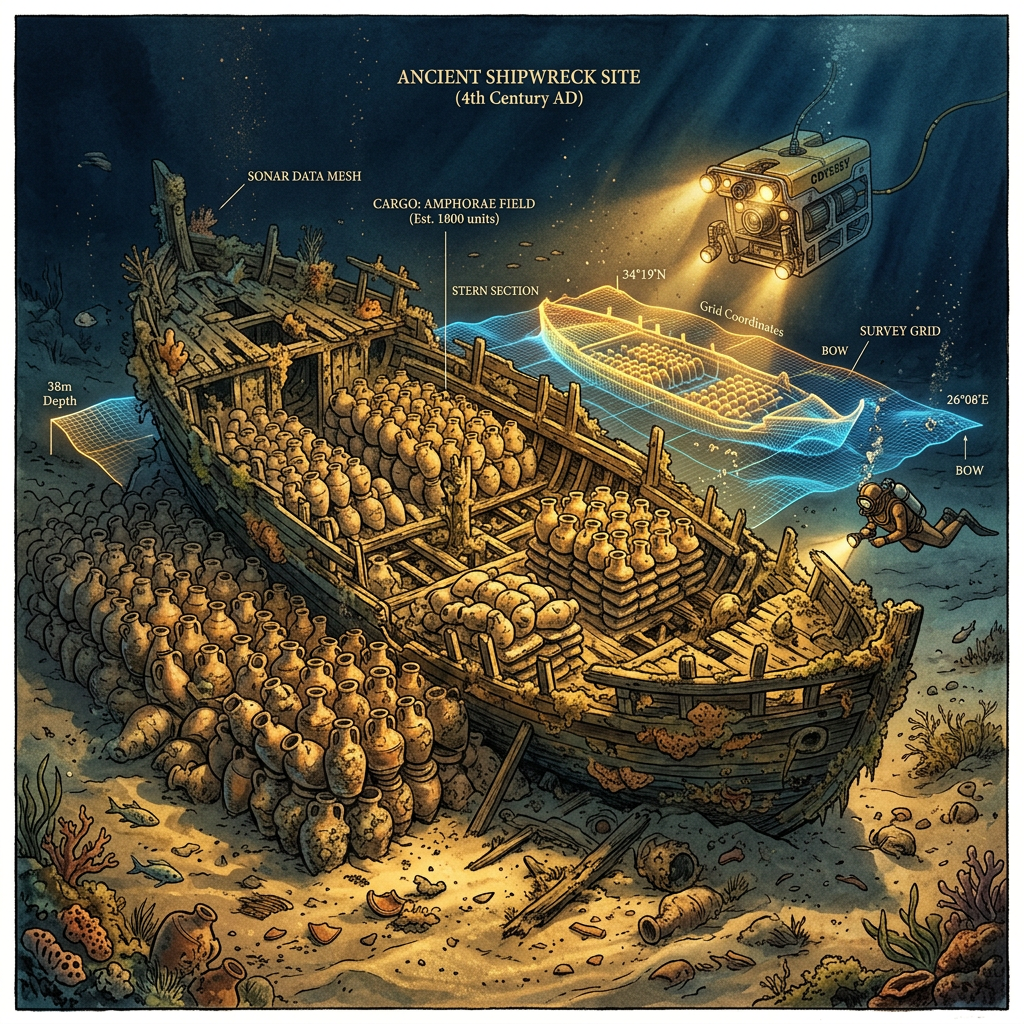
Marine archaeologists using autonomous underwater vehicles (AUVs) have identified a 2,200-year-old Rhodian merchant ship resting at a depth of 150 meters off the coast of modern-day Turkey. The vessel is exceptionally well-preserved due to the lack of oxygen at that depth. While the wooden hull remains partially buried, the cargo deck is visible, revealing hundreds of amphorae of a type specifically associated with the island of Rhodes.
What makes this find extraordinary is the recovery of several sealed jars containing carbonized seeds and dried botanical specimens, including saffron, peppercorns, and an unknown variety of medicinal herb. This discovery provides the first physical evidence of the specific luxury botanical trade routes between the Aegean islands and the Levant during the Hellenistic period. The team plans to use robotic arms to retrieve more samples for DNA sequencing.