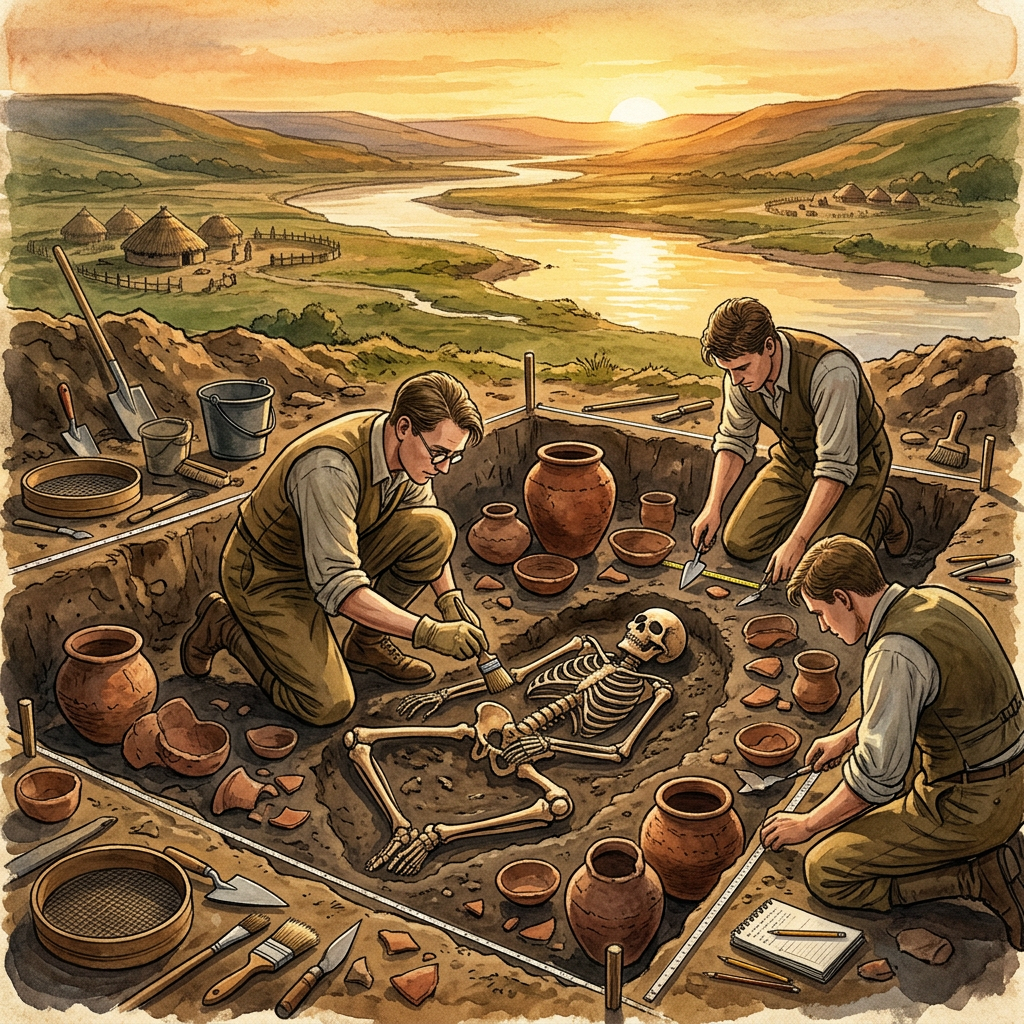
A groundbreaking paleogenomic study published in Nature Genetics has analyzed DNA from skeletal remains discovered in the Pranhita-Godavari basin, dating to approximately 2000 BCE. The research identifies a unique genetic signature that distinguishes these early agro-pastoralists from contemporary northern populations, suggesting a localized evolution of farming communities in the Deccan plateau.
The findings reveal that these ancient inhabitants possessed specific genetic markers associated with high-protein dietary adaptations, likely linked to the early domestication of indigenous pulses and millets. This study provides the first direct evidence of a 'ghost lineage' that contributed significantly to the ancestral makeup of modern-day Dravidian-speaking populations in southern India.