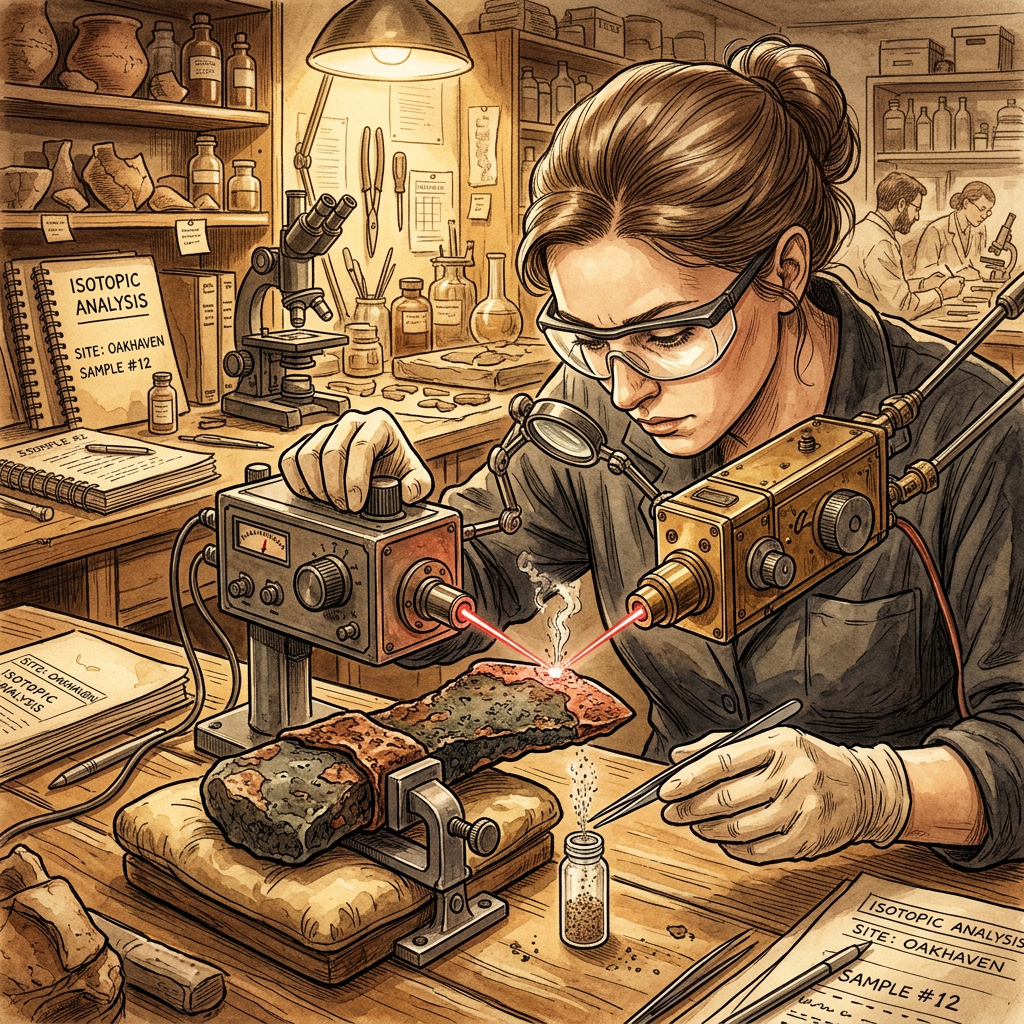
Scientists at the Archaeological Chronometry Center have announced a revolutionary dating technique using Chlorine-36 isotope pulses found in mineralized residues on pottery. This methodology was applied to sites in the Godavari Valley, providing a decadal-scale timeline for the transition from the Neolithic to the Chalcolithic period between 2800 and 2500 BCE.
The refined dates reveal that the adoption of copper metallurgy was far more rapid than previously estimated, occurring over a span of just 50 years. This high-resolution chronological framework allows researchers to correlate technological shifts with sudden changes in monsoon intensity, offering a clearer picture of how ancient societies adapted to climate variability.