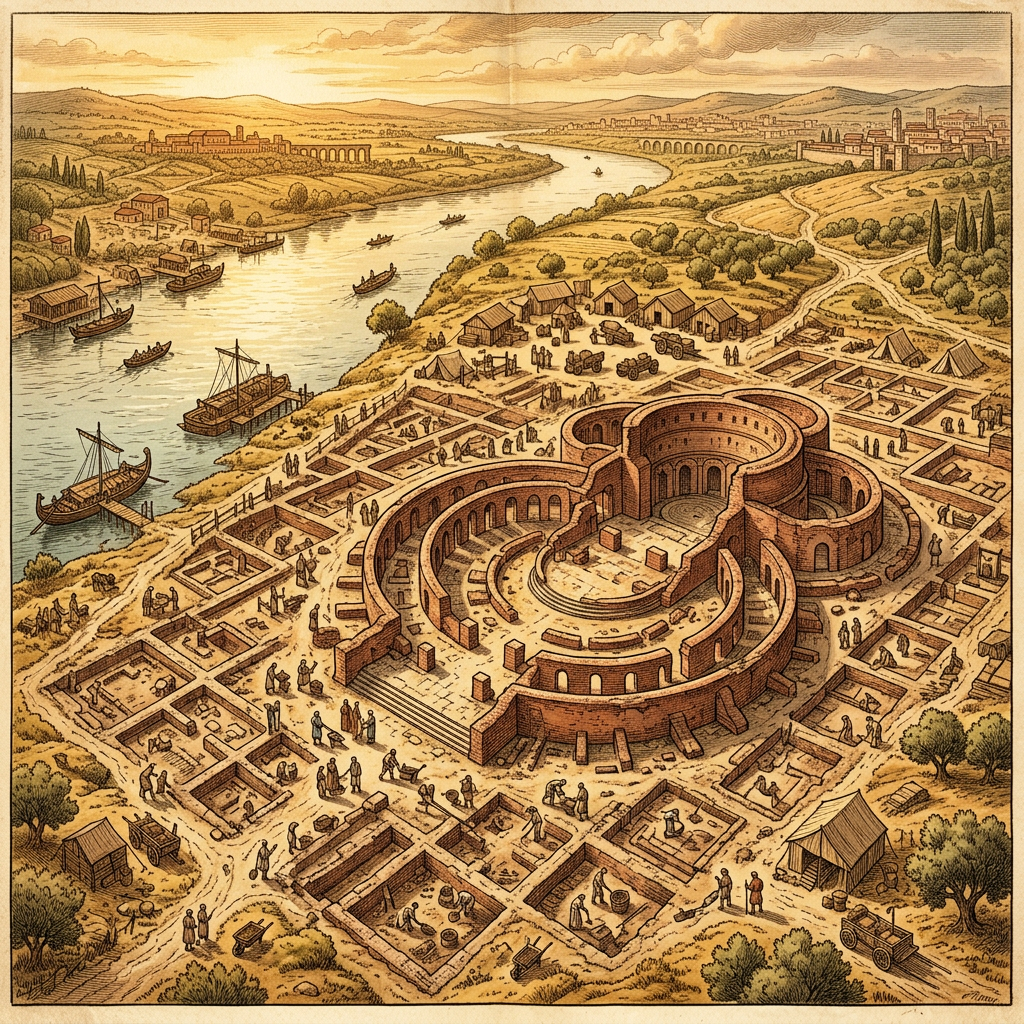
A recent excavation led by the State Department of Archaeology has revealed the massive foundations of a 2,200-year-old brick temple complex near the banks of the Krishna River. The layout features a unique apsidal plan, characteristic of the early Ikshvaku and Satavahana architectural transition. Researchers found thousands of stucco fragments and terracotta roof tiles, suggesting the temple once boasted elaborate exterior decorations depicting Vedic and Buddhist syncretic motifs.
This discovery is crucial for understanding the evolution of structural temples in South India, as brick-based sanctuaries from this early period are rarely preserved. The site also yielded several lead coins and miniature votive vessels, indicating that the temple was a major pilgrimage hub along the ancient trade routes connecting the Deccan to the coastal ports. Plans are underway to establish a site museum to protect the fragile brickwork from seasonal flooding.