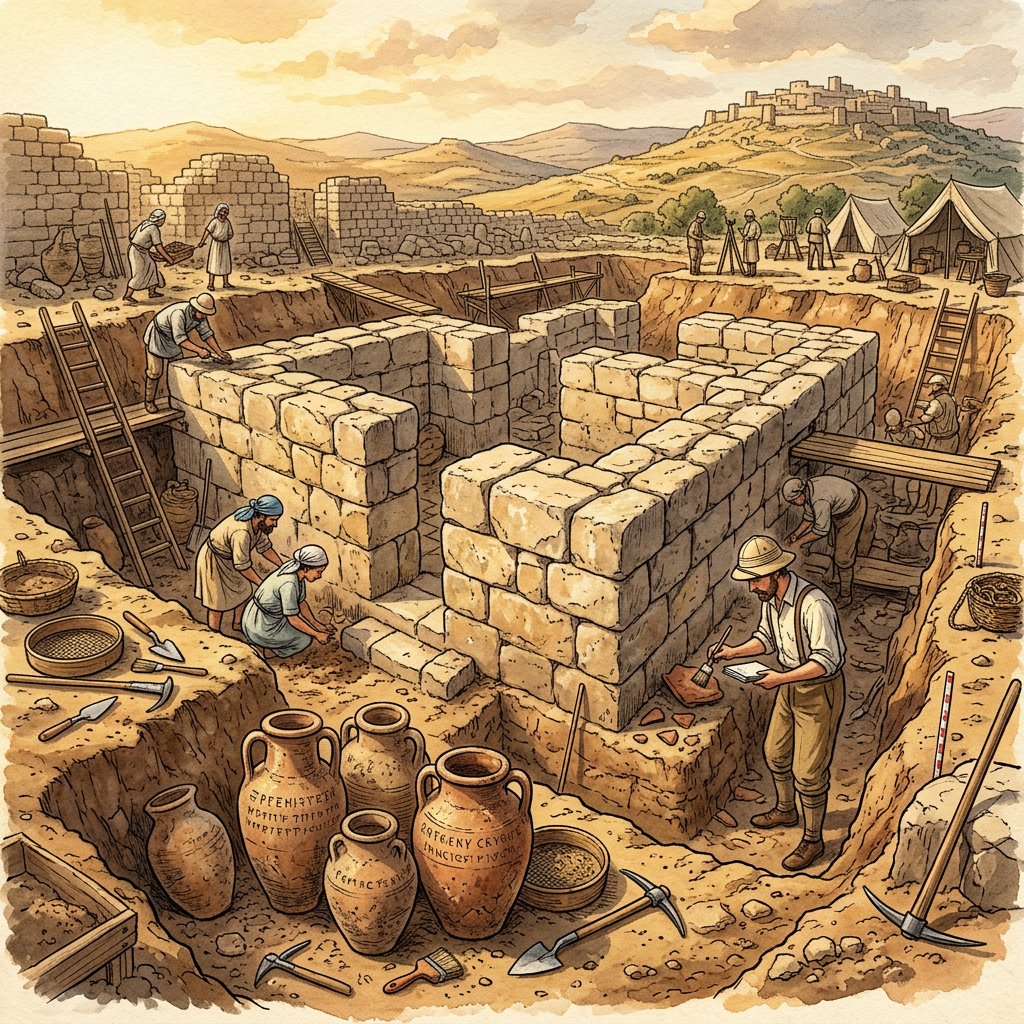
Excavations at the ancient site of Tell es-Safi, historically identified as Gath, have uncovered a massive Philistine administrative center dating to the Iron Age IIA. The monumental structure, featuring ashlar masonry and imported cedar beams, appears to have served as a regional hub for tax collection and agricultural management during the height of Philistine power.
Within the central courtyard, archaeologists discovered several ceramic jars bearing hieratic and cuneiform inscriptions, a rare find that suggests a high level of literacy and diplomatic engagement with neighboring Levantine kingdoms. This site provides critical evidence of the complex social hierarchy and urban organization that defined Philistine city-states beyond their traditional coastal strongholds.