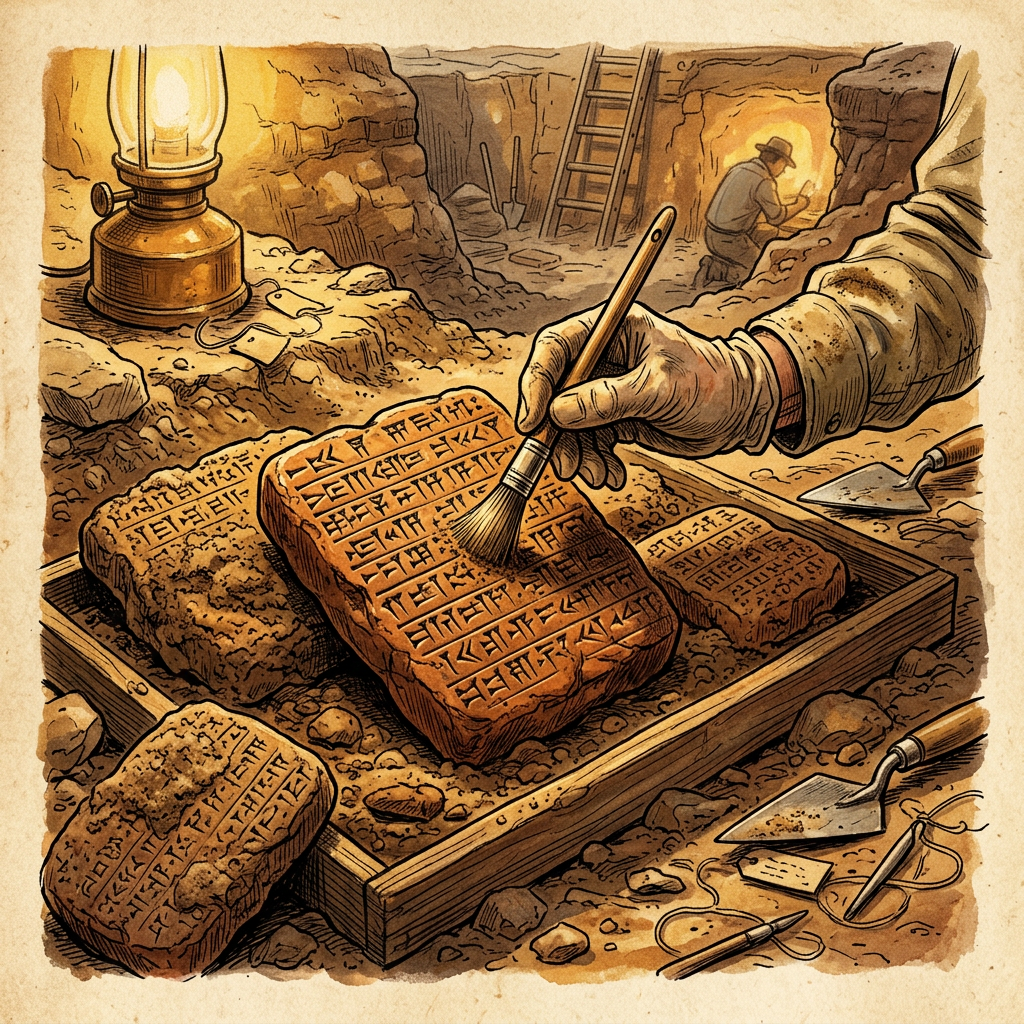
Excavations near the ancient site of Agroha in Haryana have revealed a cache of baked clay tablets inscribed with a philosophical poem titled 'Rta-Maya-Vichara'. Dated to the 4th-century BCE, the tablets explore the tension between Rta (Cosmic Order) and Maya (Illusory Change). The author suggests that the universe is a 'rhythmic illusion' where stability is merely a perceived pattern in a state of constant flux.
This find is particularly significant as it represents one of the earliest written attempts to synthesize the rigid order of the Vedic Samhitas with the fluid metaphysics of the early Upanishads. The tablets use a transitional script that bridges late Harappan symbols with early Brahmi, offering a rare glimpse into the intellectual evolution of the Indo-Gangetic plain during the pre-Mauryan era.