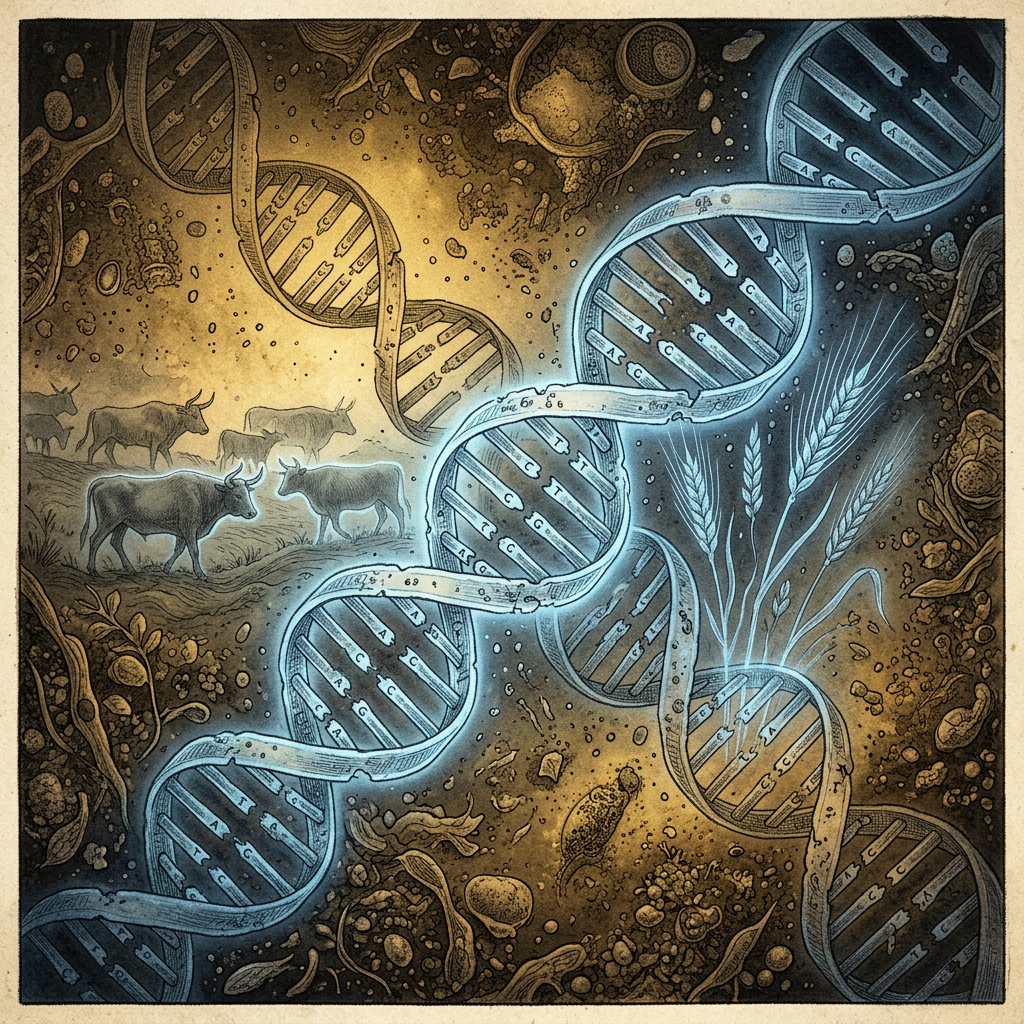
New research published in Science has detailed the paleogenomic reconstruction of human remains from the late Epipaleolithic Levant. The study identifies the earliest known genetic markers for pathogen resistance specifically linked to early animal husbandry. This genetic shift, appearing roughly 12,000 years ago, suggests that human populations were adapting to zoonotic diseases far earlier than the fully developed Neolithic period previously suggested.
The analysis focused on the HLA-DRB1 gene complex, revealing a surge in allelic diversity that coincides with the first evidence of semi-sedentary lifestyles. Dr. Elena Moretti, the lead geneticist, noted that this 'genomic footprint' provides a new timeline for when humans and domesticable species first began the intensive biological exchange that would define the modern era. This study refines our understanding of the biological cost of the transition from foraging to farming.