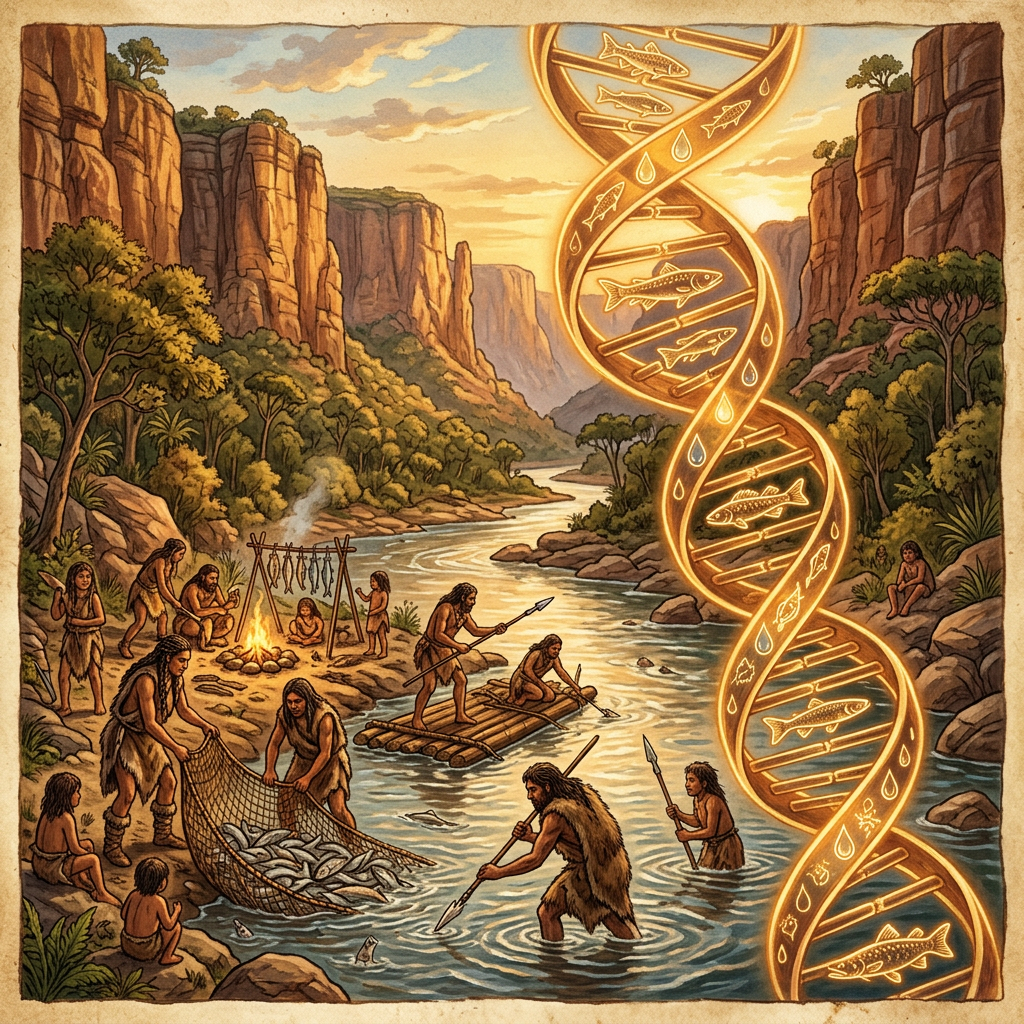
In a study published in Nature Communications, geneticists have analyzed the remains of hunter-gatherers from the Iron Gates Gorge on the Danube. They discovered a unique genetic adaptation in the FADS gene cluster, which allowed these populations to efficiently process omega-3 fatty acids from freshwater fish. This is the first evidence of localized genetic selection driven specifically by a riverine ecosystem predating the Neolithic revolution.
The findings indicate that these Mesolithic communities were not merely opportunistic foragers but had developed a highly specialized biological and cultural relationship with the river over millennia. Dr. Sarah Jenkins explained that this 'fish-eater's signature' provides a vital link in understanding how human metabolism evolved in response to diverse post-glacial environments before the widespread adoption of agriculture and dairy.