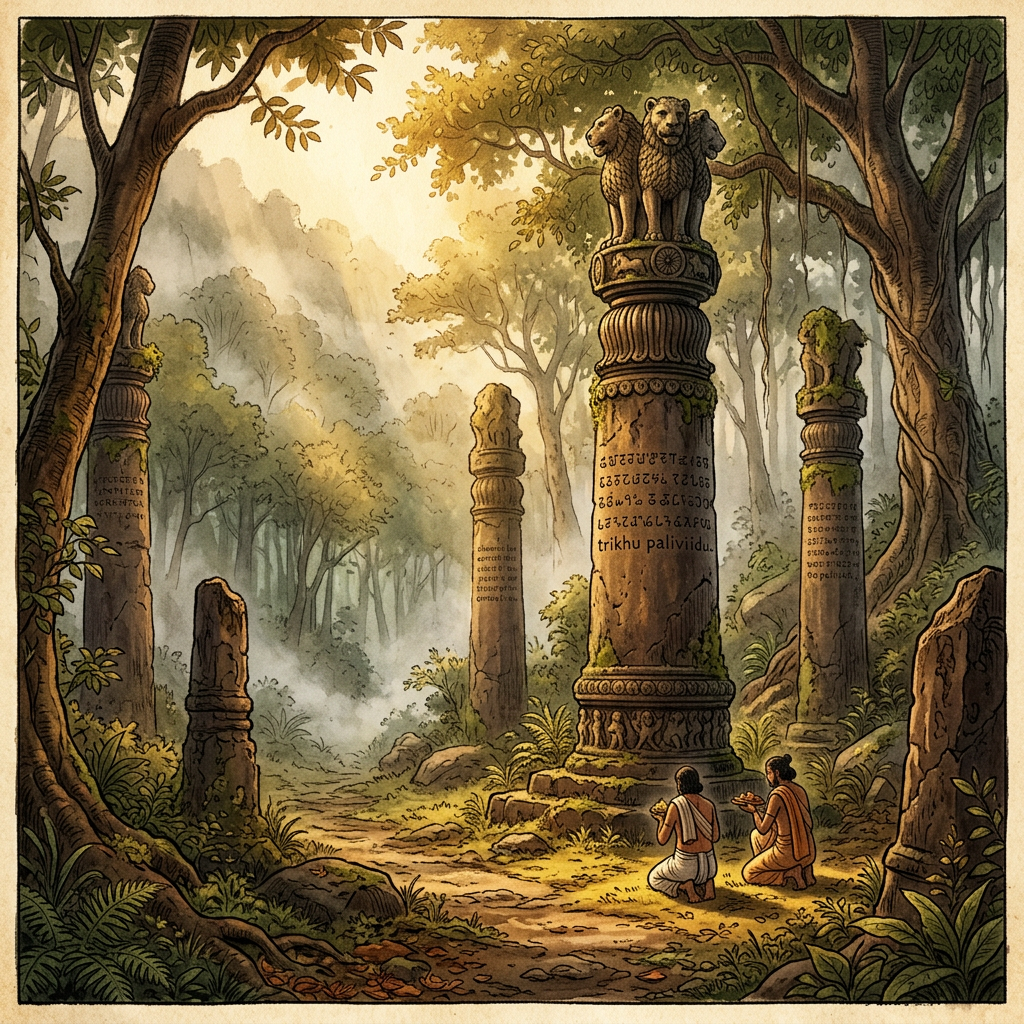
A series of rock-cut inscriptions discovered in the Western Ghats of Maharashtra has been identified as a 5th-century treatise on 'Prakriti-Niyama' or the Laws of Nature. Deciphered by a multi-disciplinary team from the Deccan College Research Institute, the Brahmi script inscriptions outline a sophisticated ethical framework that mandates the protection of biodiversity as a fundamental Dharmic duty. The text argues that the 'moral momentum' of a society is directly tied to its treatment of non-human life forms.
These inscriptions are unique because they pre-date many known environmental treatises in the region, providing a formal logical argument for ecological conservation based on the Vedic concept of Rta (cosmic order). Lead epigraphist Dr. Anil Deshmukh noted that the inscriptions describe the forest not merely as a resource, but as a 'sentient assembly' with which humans must maintain a contract of reciprocity.