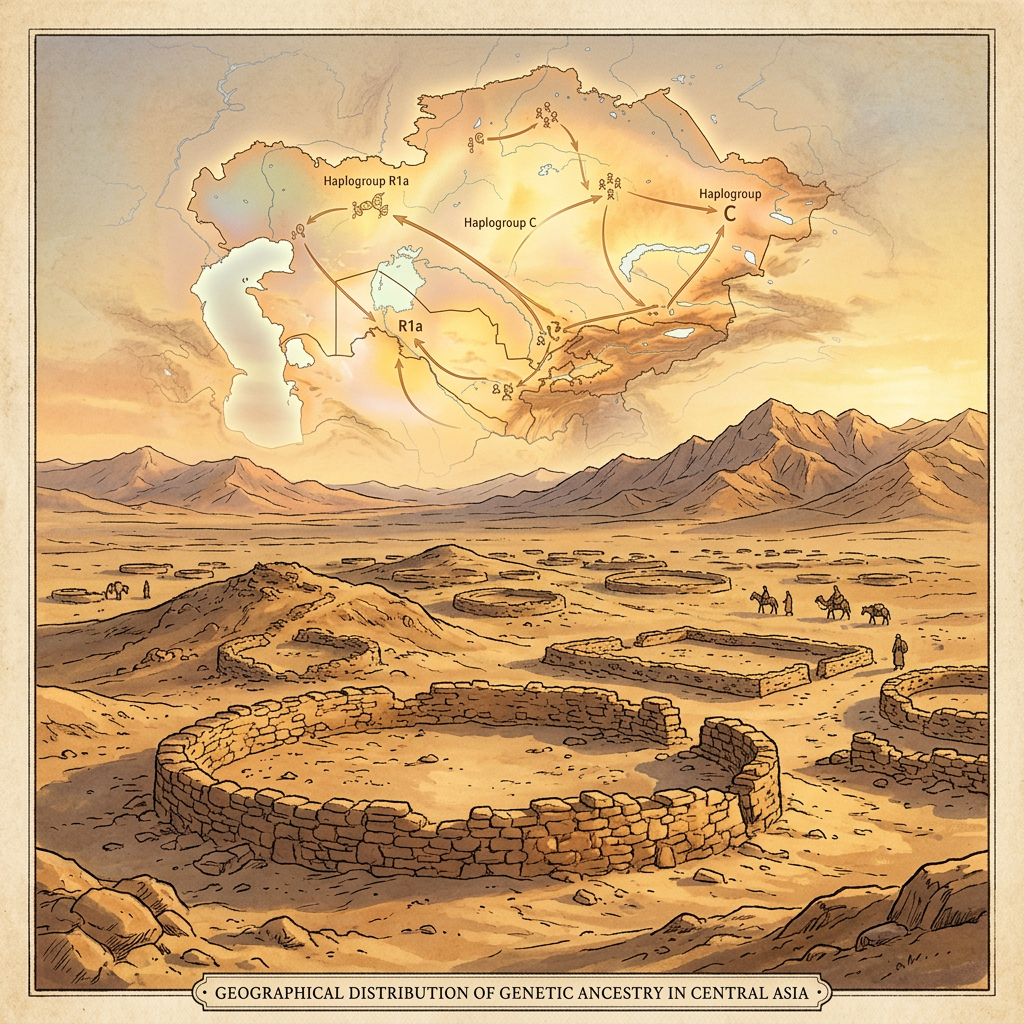
A large-scale paleogenomic study in Cell Reports has mapped the genetic history of the Trans-Caspian region during the Neolithic transition. By analyzing remains from the 8,000-year-old Jeitun culture, researchers identified a unique genetic signature representing a previously unknown 'ghost' population that contributed to the development of aridity-resistant animal husbandry.
The study reveals that these early pastoralists possessed specific genetic adaptations for metabolic efficiency in desert environments, which were later disseminated across the Eurasian steppe. This research provides a new framework for understanding how gene-culture co-evolution enabled the spread of domesticates into the increasingly arid landscapes of Central Asia during the mid-Holocene.