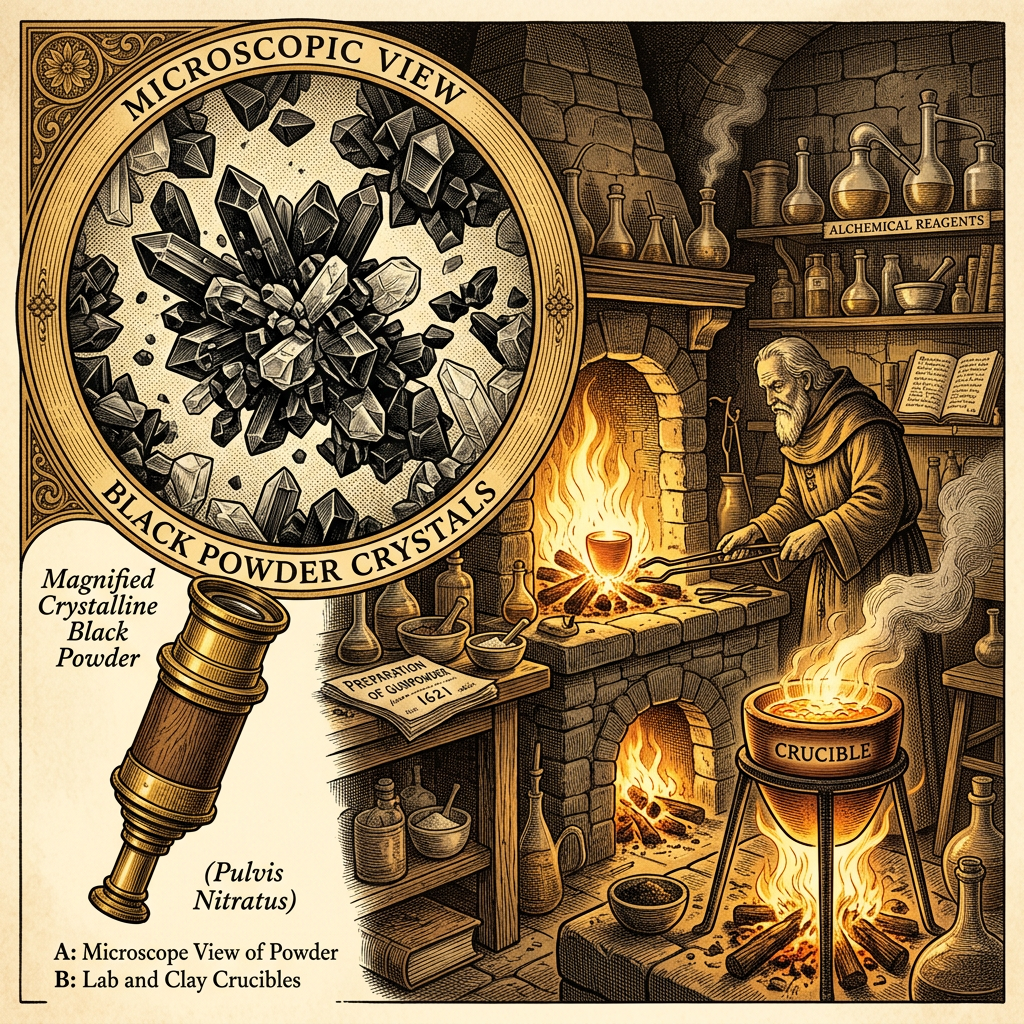
Scientific analysis of 9th-century Rasashastra (Indian alchemy) manuscripts has uncovered detailed protocols for the synthesis of Kajjali, a medicinal black mercury sulfide. A study in the Journal of Archaeological Science demonstrates that the specific grinding and incineration processes described in the text resulted in the creation of mercury-sulfide nanoparticles with unique bioavailability properties.
Using scanning electron microscopy on replicated samples based on the ancient formulas, researchers confirmed that the medieval practitioners achieved a consistent particle size in the nano-range. This suggests that the practitioners of Iatrochemistry in early medieval India had developed sophisticated empirical methods for manipulating matter at the molecular level, centuries before the formalization of modern nanotechnology.