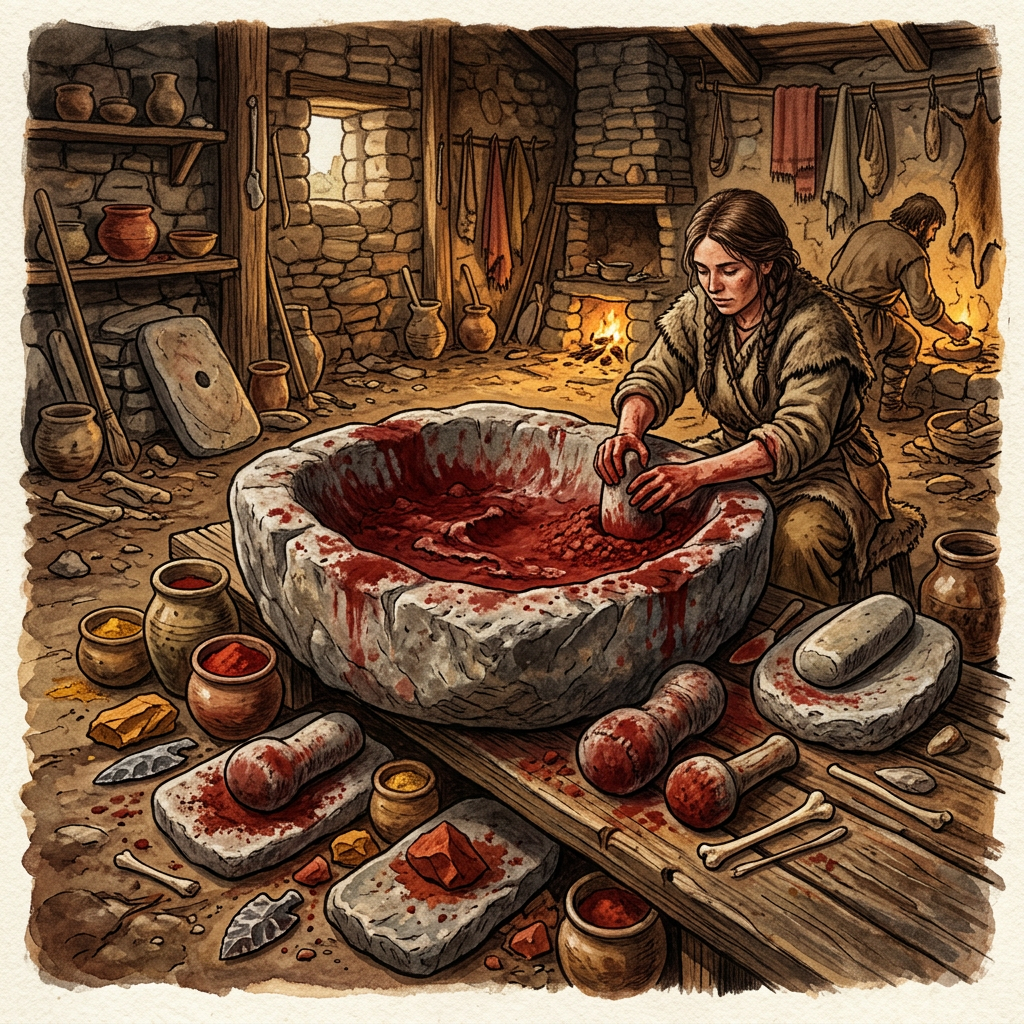
Archaeologists in Zhejiang Province, China, have uncovered a monumental stone platform believed to be a 5,000-year-old vermilion processing factory belonging to the Liangzhu culture. The site features massive stone basins used for grinding cinnabar ore into the brilliant red pigment used to decorate elite jade artifacts and ritual burial masks.
The excavation revealed specialized stone pestles with traces of high-purity mercury sulfide, indicating that the Liangzhu people had mastered advanced mineral refinement. The site’s location near the royal palace suggests that the production of red pigment was a state-controlled monopoly essential for religious and funerary rites.