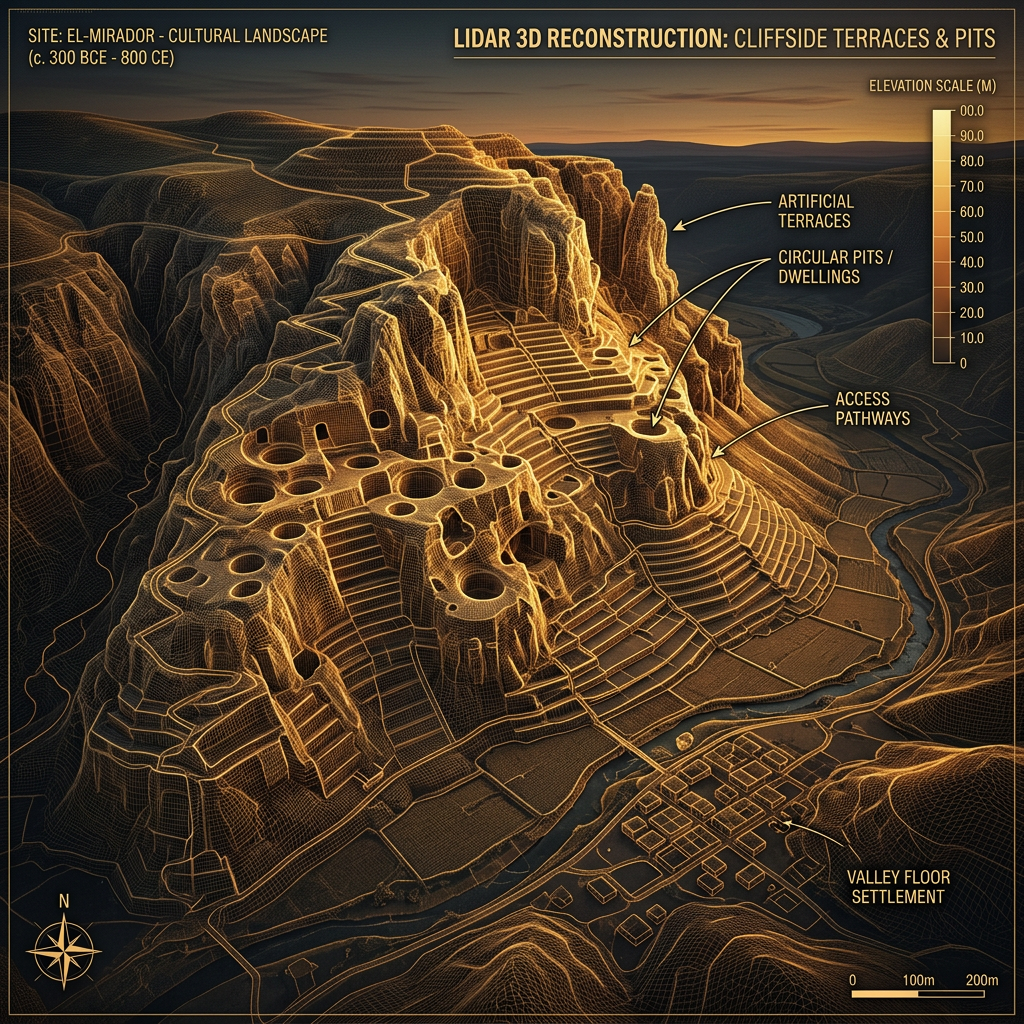
High-resolution LiDAR surveys in Western Australia’s Kimberley region have identified a vast network of terraced rock-shelters and subterranean storage pits that challenge the traditional narrative of nomadic hunter-gatherer societies in Australia. The mapping reveals that early inhabitants modified natural cliff faces to create level living surfaces and carved deep, moisture-proof silos directly into the sandstone, likely for the long-term storage of native grains and tubers.
Dating of charcoal found in the pits indicates the system was in use as early as 13,000 BCE. This level of landscape engineering suggests that Aboriginal communities in the Kimberley were practicing forms of semi-sedentism and surplus management long before the arrival of agriculture in other parts of the world. The LiDAR data shows over 400 such shelters connected by a series of high-altitude pathways across the rugged escarpments.